How Surgical Scar Camouflage Can Help and Its Limits
Surgical scar camouflage can help a scar blend in so it does not call as much attention, but it cannot erase a scar. That difference matters. This treatment works with the skin you have, the scar you have, and aims for softer, more natural-looking skin, not perfection.
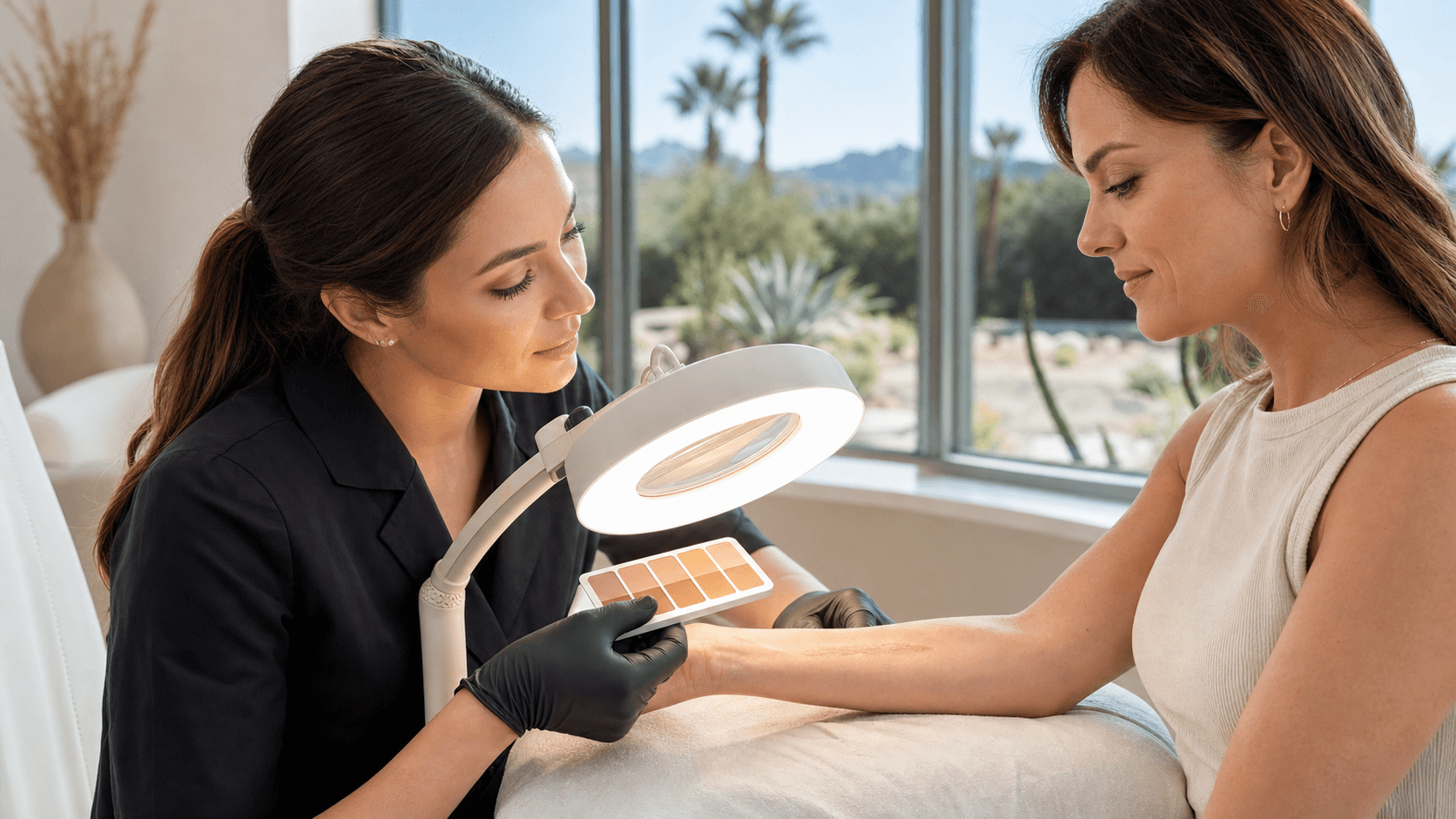
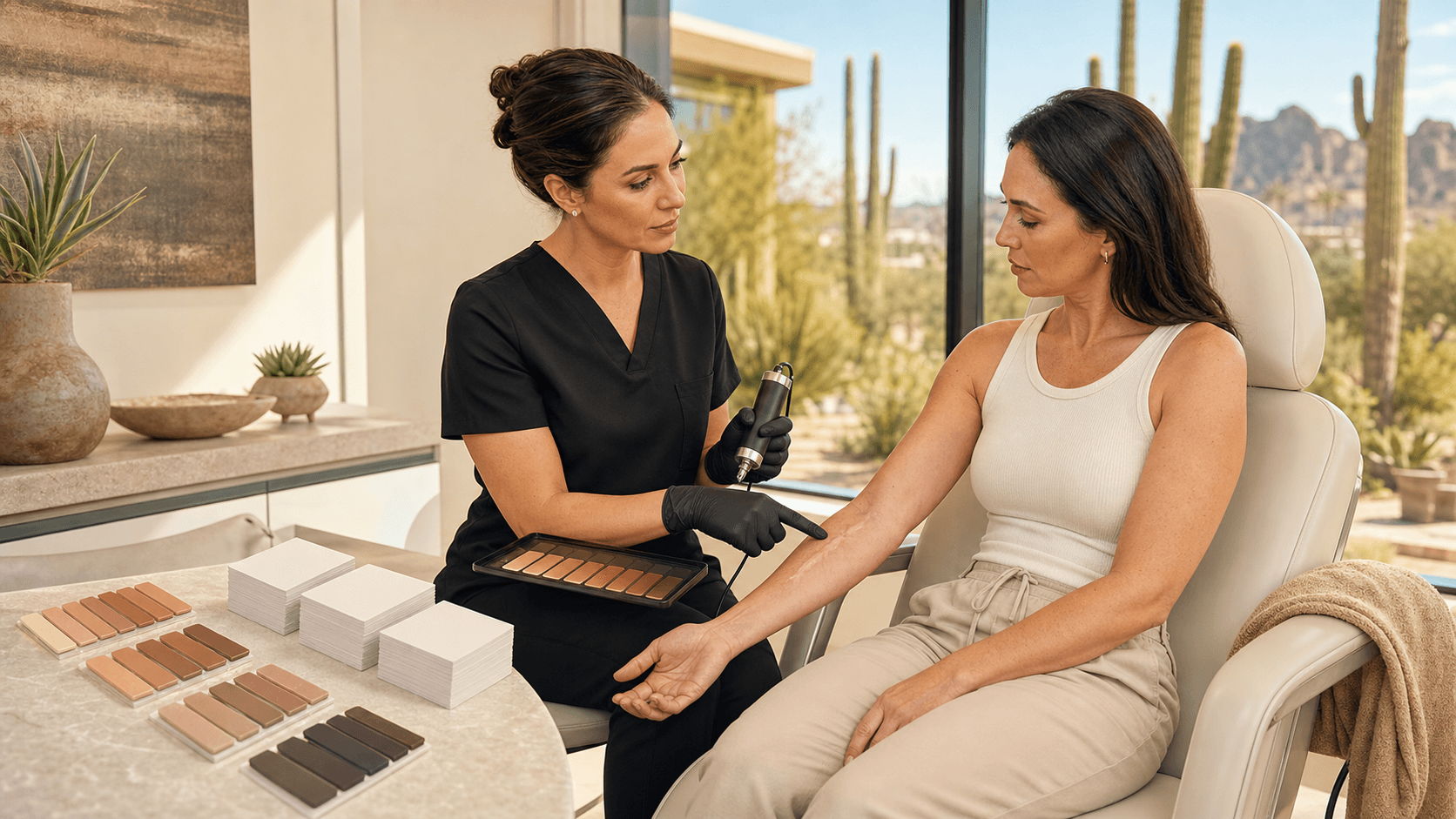
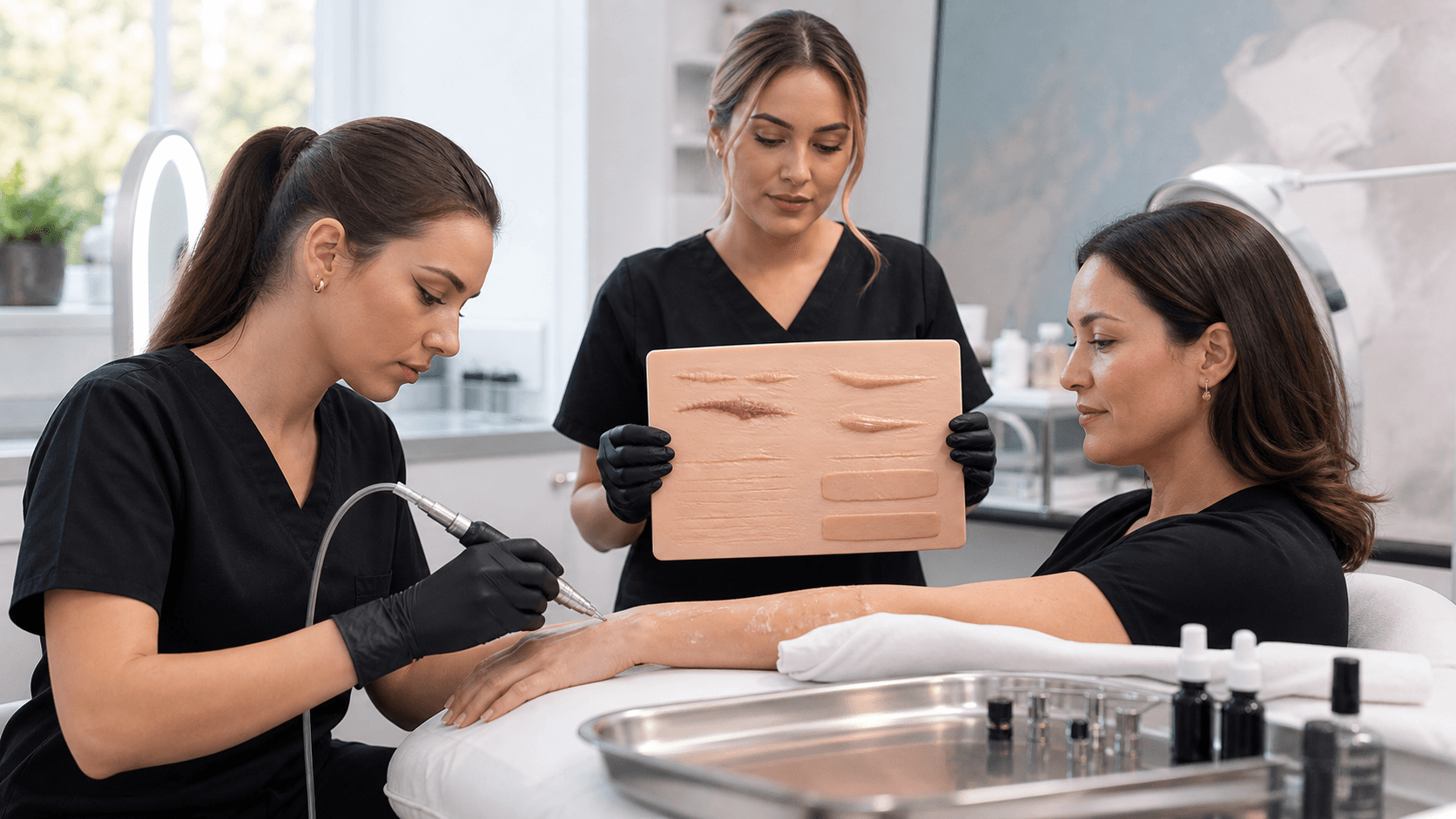
In simple terms, surgical scar camouflage is a paramedical skin and pigment treatment. We place carefully mixed skin-tone pigment into the upper layers of the skin to reduce the sharp contrast between the scar and the surrounding tissue. It is not traditional tattooing, and it is not cosmetic microneedling for fine lines. It is a specialized correction approach focused on scarred tissue.
Understanding both what surgical scar camouflage in Arizona can do and what it cannot do is especially important here. Our strong sun, long hours outdoors, and heat all affect how scars and pigments look over time. At TGS Lab in Scottsdale, we focus on skin science, tissue response, and realistic outcomes, which is why we take time in consultation before building any treatment plan.
What Surgical Scar Camouflage Actually Does
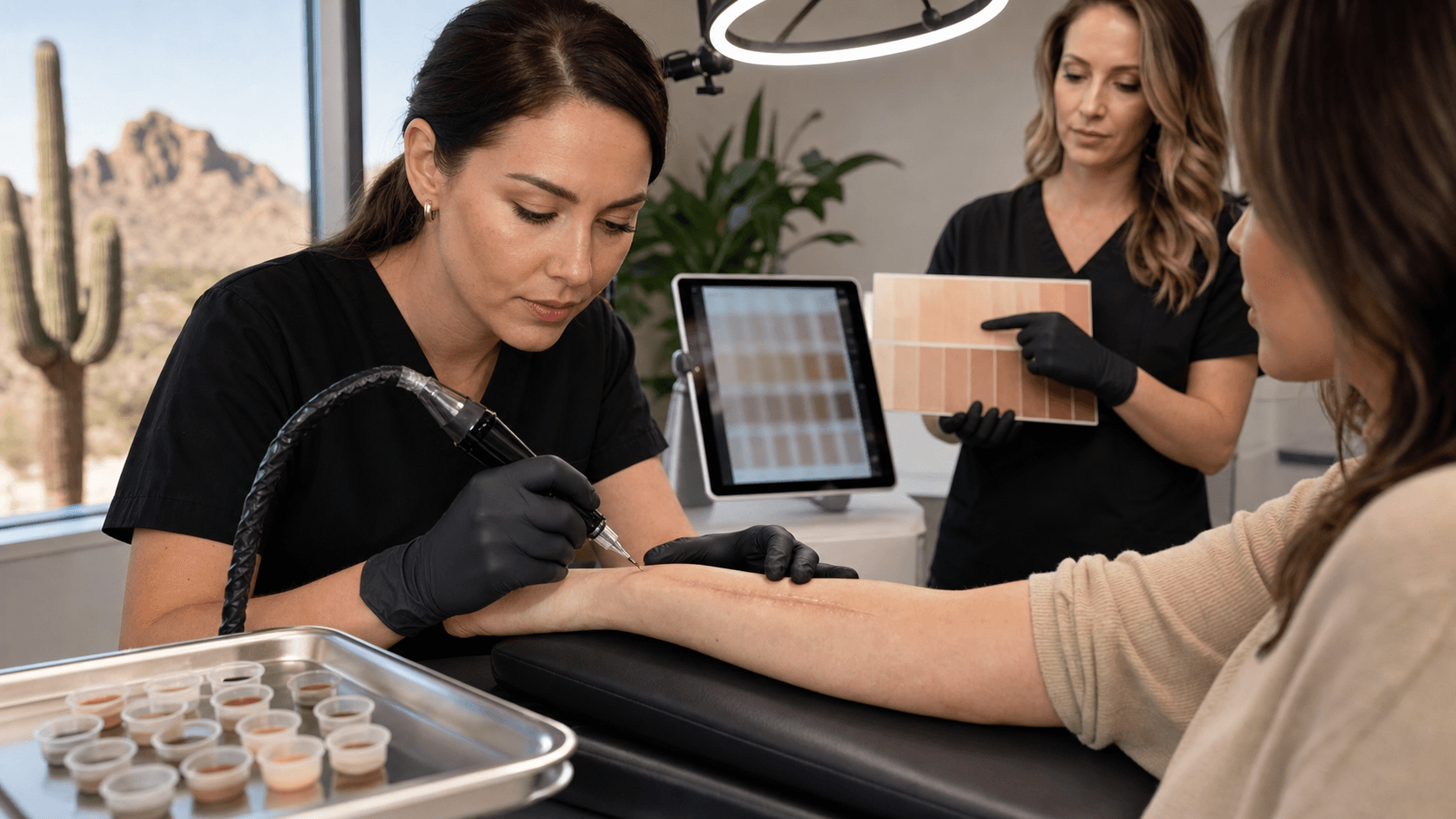
The goal of camouflage is to help the scar look more like the skin around it. We do this by placing custom-mixed pigment into the upper dermal layers. The pigment sits within the scar and nearby tissue so that, to the eye, the sharp "line" or bright patch is softened.
This is different from decorative tattooing because:
- The goal is to blend, not to create visible art
- Color mixing is based on your skin at rest, not ink colors
- Placement is adjusted to how scar tissue holds pigment, which is often different from normal skin
Many types of fully healed surgical scars can respond well, such as:
- Breast augmentation or reduction scars
- Tummy tuck and body contouring scars
- C-section scars
- Facelift and neck lift scars
- Other surgical incision scars that are stable and cleared for non-medical work
Realistic goals usually look like this:
- Less bright white or deep red contrast
- Less obvious line or "shadow" effect in photos and daily life
- A closer match to surrounding skin from a normal speaking distance
Even with excellent results, most people will still see some signs of a scar up close or in certain lighting. The goal is "less noticeable," not "never existed."
What Surgical Scar Camouflage Cannot Change
Camouflage is a color and visual blending option, not a structural fix. It cannot change:
- Texture, such as raised, bumpy, or indented areas
- Tight, tethered scars that pull on movement
- Thick keloid scars that keep growing outside the original wound
Those issues are better handled by medical providers, which may include surgical revision, laser treatments, or other medical scar therapies when appropriate.
It is also important to remember that this is not a medical cure. Surgical scar camouflage:
- Does not remove scars
- Does not treat underlying medical conditions
- Does not stop natural aging or sun-related changes in the skin
Common misconceptions we hear include:
- Expecting perfect color matching in every type of light
- Expecting the camouflaged scar to tan exactly like normal skin
- Assuming every scar and every skin type is a good candidate
Some scars do not hold pigment well. Some skin tones are at higher risk for unwanted darkening or lightening. A careful assessment and honest talk about your personal risk and potential outcome are always needed before moving forward.
What to Expect From Your Treatment Plan in Arizona
At TGS Lab, the process always starts with a detailed consultation. We look closely at:
- Scar type, age, and stability
- Skin tone and undertones
- Past treatments, such as surgery, laser, or injections
- Medical history that might affect healing or pigment response
When needed, we may do a small patch test on or near the scar. This helps us see how your tissue holds color and heals in real life, which is especially helpful in a sunny, dry climate like Arizona.
Most scar camouflage cases need a series of 2 to 4 sessions. We space these sessions weeks apart so we can:
- Slowly build color in thin layers
- Watch how the scar tissue responds
- Adjust color and technique to improve blending as we go
Healing after each session is usually mild for most clients. It is common to see:
- Mild redness
- Light sensitivity or tightness
- Slight dryness or flaking as the area heals
Most people return to normal daily tasks quickly, while still following aftercare instructions. Early changes may be visible after the first session, but the more refined, blended look typically appears after the final session and full healing.
Tanning, Color Matching, and Long-Term Results in the Arizona Sun
Arizona's sun is strong, and that affects both untreated and camouflaged scars. Many people notice that the skin around a scar tans, but the scar itself stays lighter or darker. Even without pigment, scars often do not tan like normal skin.
When we color match, we mix pigments to match your natural skin tone at rest, not at your deepest tan. We also avoid going too dark, because that can look unnatural as your skin lightens again. Perfect matching in every type of light and every stage of your tan is not realistic, so we aim for the best average blend.
Good long-term care makes a difference:
- Daily SPF on exposed areas
- Clothing or physical barriers when you are outside for long periods
- Planning outdoor activities while healing so the area is protected
Over time, both your natural skin and the pigmented scar can shift slightly. Some people choose touch-ups down the line to keep the blend looking smooth. Keeping expectations flexible is important, because skin is living tissue that keeps changing with age, hormones, and sun exposure.
Is Surgical Scar Camouflage in Arizona Right for You?
Not every scar and not every person is a match for this treatment. Helpful questions to consider include:
- Is your scar fully healed, stable in color, and at least many months old?
- Do you have a history of keloids or strong hyperpigmentation?
- Is your skin sensitive or reactive?
- Do you spend many hours in the sun or enjoy frequent tanning?
- Are you able to follow aftercare in a hot, sunny climate?
Ideal candidates tend to have flat, stable scars, realistic expectations, and a willingness to protect their skin from heavy sun, especially while healing. People with active medical issues, unstable scars, or high-risk scar history may need clearance from a physician, surgeon, or dermatologist before any paramedical work is considered.
At TGS Lab, we take an ethical, conservative approach. We do not promise perfect outcomes, and we do not push anyone to move forward if the risk or uncertainty is too high. Our focus is on subtle, natural-looking improvement that fits your comfort level, lifestyle, and long-term skin health.
Reveal Smoother, More Confident Skin With Expert Scar Camouflage
If you are ready to feel more at ease in your own skin, our team at TGS Lab is here to help with precision techniques tailored to your unique needs. Discover how our specialized approach to surgical scar camouflage in Arizona can soften the look of your scars and blend them with your natural skin tone. Schedule your session today so we can create a customized treatment plan that supports your confidence and long-term results.