How Scottsdale Sun Affects Your Scar Options
Scars look different in Scottsdale than they do in softer climates. Strong sun, dry air, and an outdoor lifestyle can all change how a scar heals, how it looks, and what is safe to do with it. If you are thinking about a scar camouflage tattoo in Scottsdale, those factors matter just as much as the scar itself.
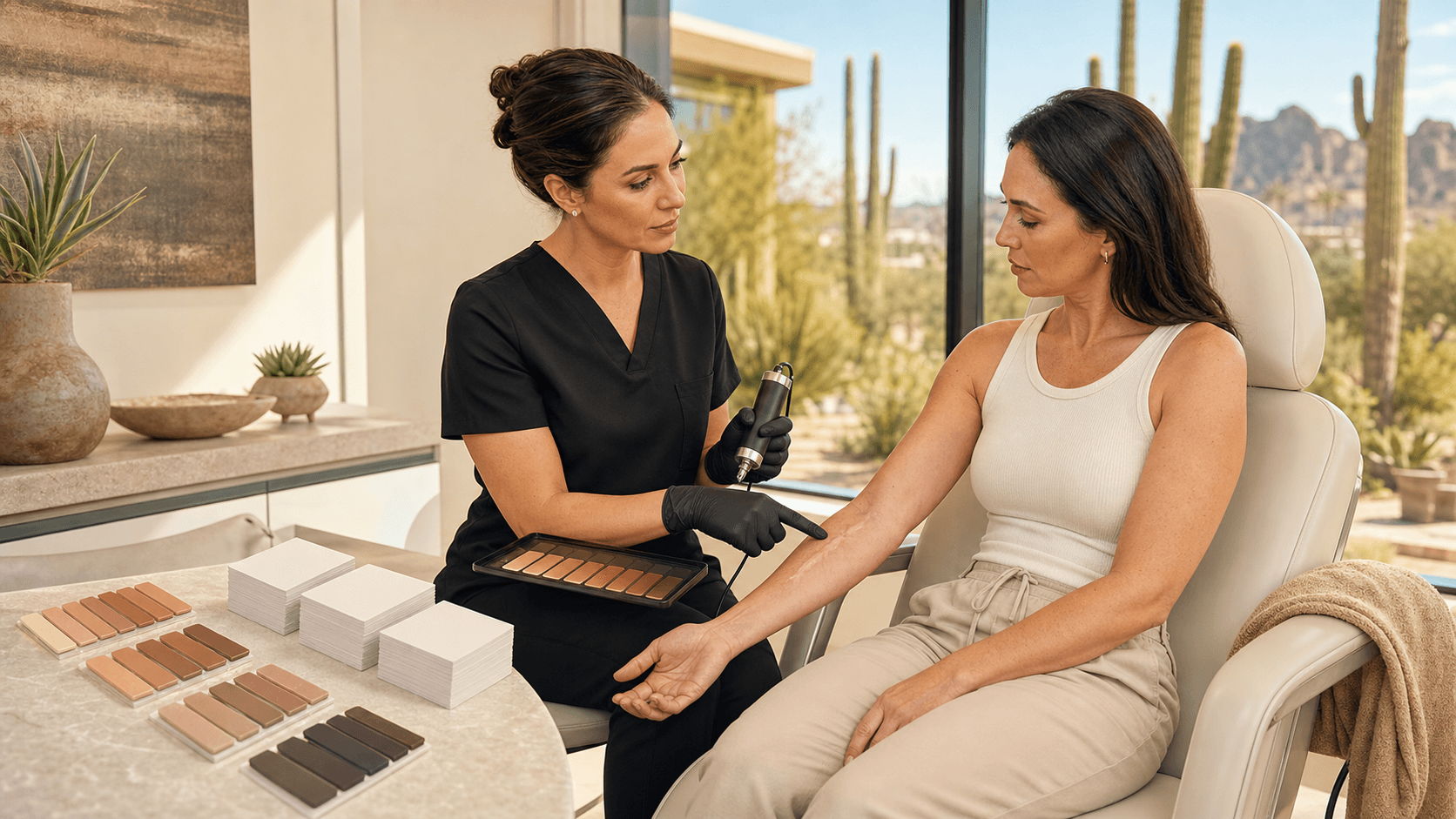
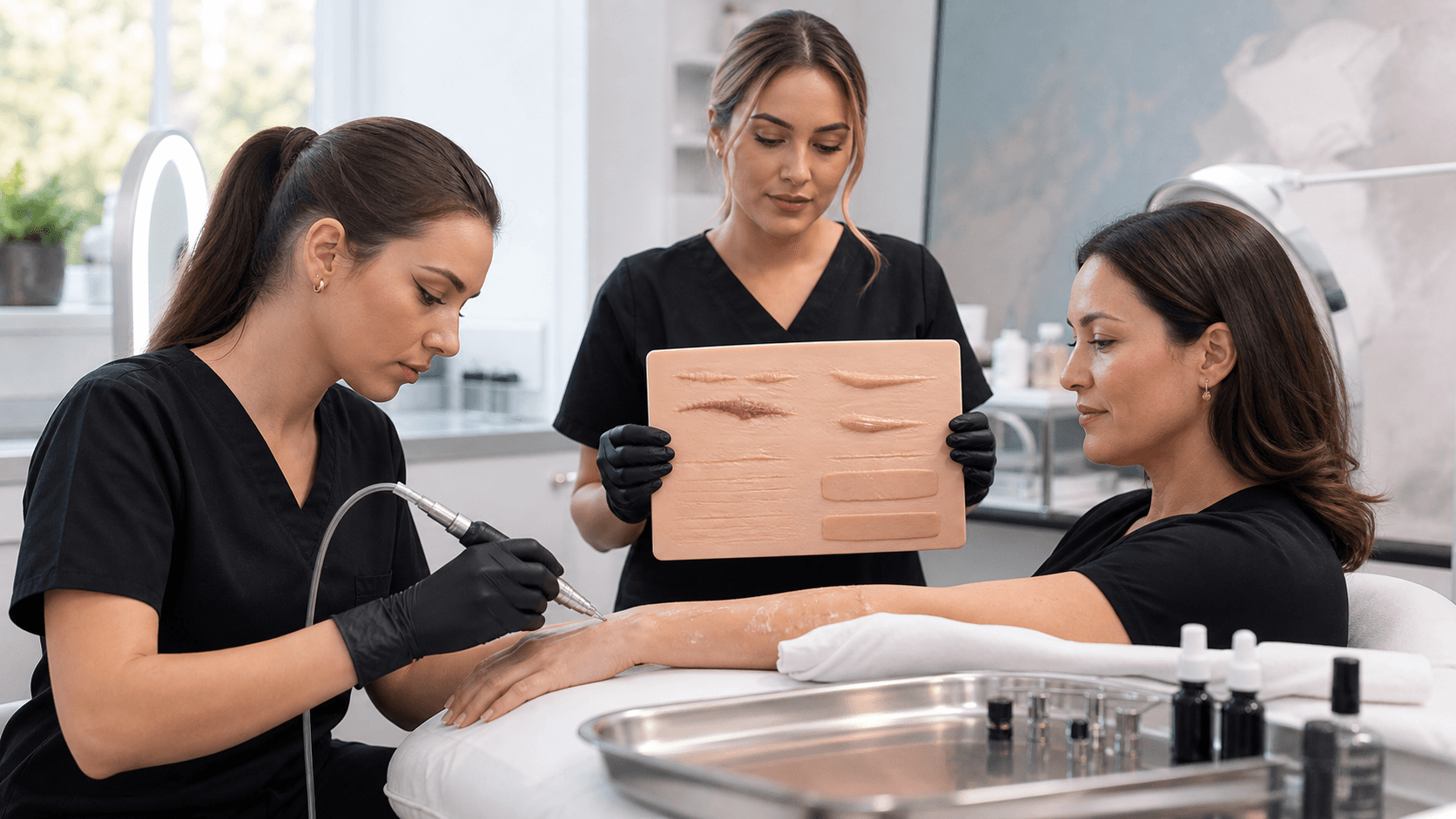
Scar camouflage is a paramedical tattoo approach. Instead of decorating the skin, we focus on carefully placing pigment to reduce contrast between the scar and the surrounding tissue. The goal is to help the scar blend, not to create a design or regular makeup effect.
Because the Arizona sun is intense, not every scar is a good candidate. Evaluation is about skin safety, realistic expectations, and long-term color stability while you live your normal life outside, at the pool, or on the trail. A professional consultation is where we look at your unique scar, your skin type, and how you spend time in the sun before we suggest any plan.
Key Factors That Determine If Your Scar Is Ready
One of the first questions we ask is not "Can this be camouflaged?" but "Is this scar ready for tattoo work at all?" Timing and tissue health are a big part of that answer.
Scar maturity usually takes time. Many scars need roughly a year or more to stabilize. Treating too early can mean the scar is still changing underneath the pigment.
Signs that a scar is more mature can include:
- Color that has stayed about the same for several months
- Texture that is flat or stable, not getting thicker or bumpier
- Less ongoing redness, heat, or itch in the area
- No recent changes in the size or shape of the scar
Texture and thickness are the next pieces. Raised, indented, or highly textured scars usually need a different strategy than flat ones. Some scars may benefit from other medical or skin treatments first, especially if they are:
- Very raised or thick
- Deeply indented or tethered
- Growing beyond the original injury line
- Sitting across a joint or high movement area like knees, shoulders, or abdomen
Movement matters, because skin that stretches and bends all day can hold pigment differently over time.
We also pay close attention to the health of the skin around the scar. Chronic sun damage, thinning skin, or active skin conditions can change how pigment heals and how safe it is to tattoo in that spot. Looking at photos is a start, but an in-person exam lets a specialist feel the tissue, check temperature, and see how it reacts to gentle pressure. That tells us a lot about healing potential and risk.
Scar Color, Skin Tone, and Realistic Color Matching
Color is often the biggest concern people have, especially when a scar is very light or very dark against their natural tone. For paramedical camouflage, we think about your overall coloring, not just the scar in isolation.
Natural skin tone guides our pigment choices. We look at:
- Your undertone, for example cool, warm, or more neutral
- How your skin shifts from one body area to another
- How your skin appears in indoor light compared to bright outdoor sun
- Whether you tend to freckle, tan, or burn
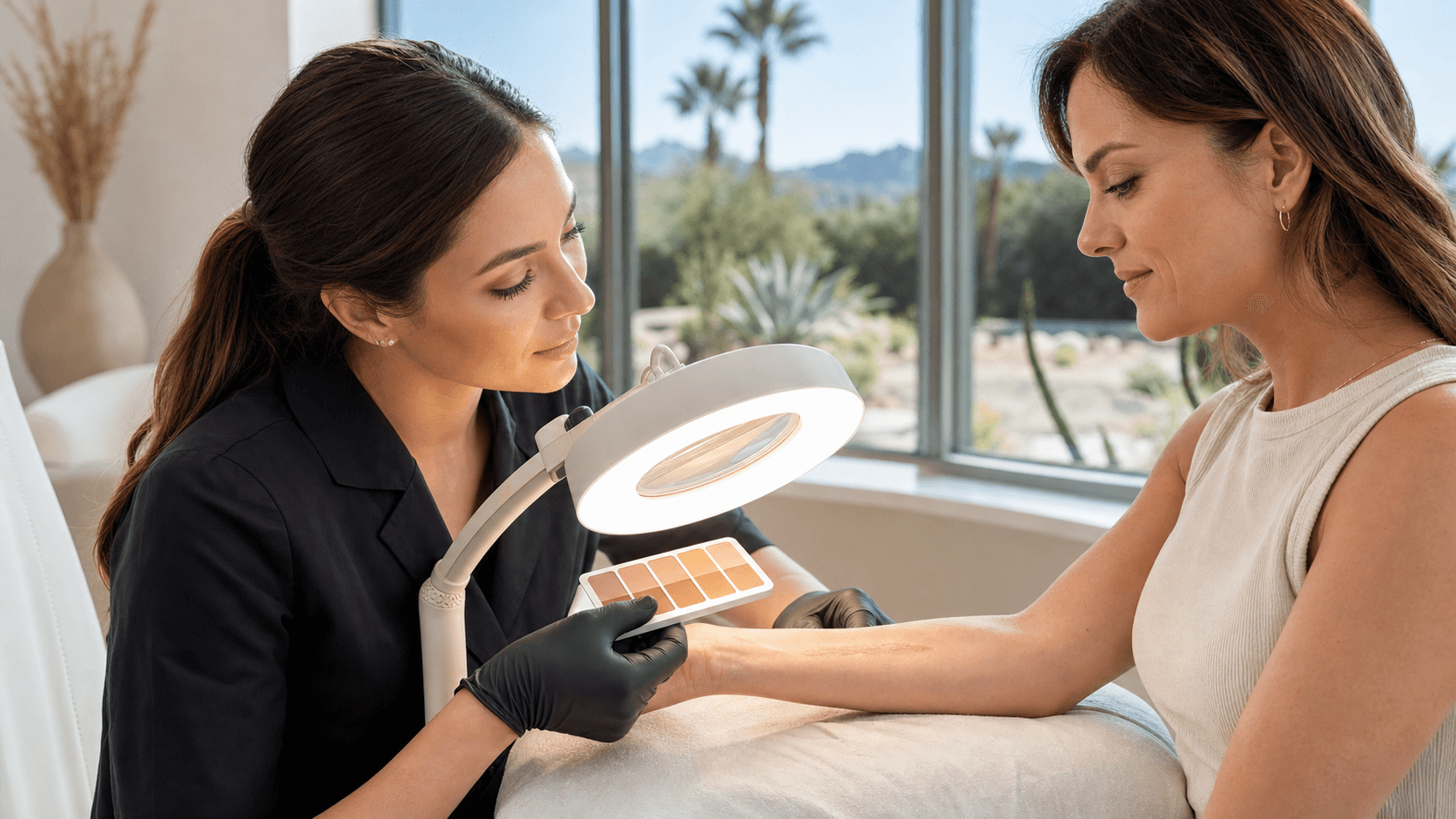
A scar camouflage tattoo in Scottsdale has to make sense both in a mirror at home and when you are out in intense sunlight. That is why we often check color in more than one lighting setup.
Some scars are harder to blend than others. Hypopigmented scars, which are lighter than the surrounding skin, often need carefully layered color so they do not look flat or painted on. Hyperpigmented scars, which are darker, can bring a different challenge because we do not want to add more darkness or create a border.
Scars that still look very red, purple, or gray may need staged approaches or may never fully disappear to the eye. The purpose is to reduce how much the scar draws attention, not erase all evidence that it is there.
Managing expectations is important. Color matching is a process, not a one-time event. Most people need 2 to 4 sessions, with each visit used to:
- Adjust warmth or coolness of the color
- Correct spots that healed lighter or darker
- Soften edges for a more natural fade
We watch how your tissue responds, then make careful changes instead of pushing too far in one go.
Scottsdale Sun, Tanning Habits, and Long-Term Results
Sun behavior has a big impact on how your camouflage looks over time. Pigment placed in the scar does not tan like natural melanin. When the rest of your skin darkens, the scar area can stay closer to its original color, which can bring the contrast back.
In a high UV place like Scottsdale, that effect can be more noticeable. If you love the pool, hikes, or long days outside, we want to factor that into your plan.
Tanning and frequent shade changes in skin tone around the scar can make color matching much harder. We typically recommend avoiding:
- Intentional tanning of the area right before treatment
- Tanning beds at any point in the process
- Big swings between very tanned skin and very protected skin on the same area
Self-tanners and spray tans can temporarily even things out, but they can also hide the true color of your scar at consultation. For the most accurate plan, we prefer to see your natural tone without recent self-tanner on the area we are assessing.
Long term, sun protection is key. Broad-spectrum sunscreen, UV-protective clothing, and common sense shade choices help maintain more even results. The outcome you see a year later is a mix of studio technique and your day-to-day habits.
Sessions, Healing Time, and What to Expect
Most clients are surprised that paramedical camouflage is not a single session service. A scar is already different from the surrounding skin, so we work slowly to keep the results looking like skin, not makeup.
In general, you can expect:
- About 2 to 4 sessions for layered, realistic outcomes
- Each session spaced far enough apart for full healing
- Very light adjustments rather than big dramatic changes
Healing after a session usually follows a pattern. Early on, the area may look darker than expected. Mild dryness or light peeling can show up as the skin closes. Over the next weeks, the color softens into the tissue and settles toward the planned shade.
During healing, we typically guide clients to:
- Avoid swimming or soaking the area until it is fully closed
- Skip heavy sweat on that specific spot, like intense workouts that rub the area
- Keep it out of unprotected sun until cleared to return to normal activity
Results are long-lasting, but they are not frozen in time. UV exposure, natural skin aging, and lifestyle all slowly influence the appearance. The realistic aim is a softer, less noticeable scar that sits more quietly within your overall skin, not a permanent makeup style finish.
Planning Your Scottsdale Scar Camouflage Consultation
A thoughtful assessment is the first step in deciding if camouflage is right for your scar, your season, and your lifestyle. During a professional visit, we usually cover:
- The history of the scar, including cause and age
- Visual and tactile evaluation of texture and movement
- Color analysis in different lighting situations
- A clear conversation about your sun and tanning habits
Photos may be taken in more than one light-setup to see how the scar behaves in conditions that feel similar to daily life in Scottsdale.
It helps to come prepared with details such as:
- Any past treatments like surgery revisions, laser, injections, or topical creams
- Any known sensitivities, allergies, or unusual healing you have had before
- Upcoming travel, pool plans, or outdoor events that might affect timing
We believe it is better to be honest and say a scar is not ready, or not a good candidate at all, than to move forward with a plan that is not in line with skin science or realistic outcomes. That kind of careful, paramedical approach is at the heart of how we work at TGS Lab, so your scar, your goals, and Scottsdale's sun all get the attention they deserve.
Restore Confidence With Expert Scar Camouflage
If you are ready to soften the look of your scars and feel more comfortable in your own skin, we are here to help. At TGS Lab, we carefully customize each scar camouflage tattoo in Scottsdale to blend naturally with your unique skin tone and texture. Schedule your session with our paramedical tattoo specialists so we can discuss your goals and design a plan tailored to you.