Scars can carry a lot of history, but planning your paramedical scar camouflage sessions does not have to feel overwhelming. When you understand how different scars heal, how often they should be treated, and what to expect between visits, you can set a clear, realistic timeline and feel more in control of the process.
Here in Scottsdale, many people are interested in paramedical scar camouflage for surgical scars, burn scars, or stretch marks. In this article, we explain how we space sessions, how we layer pigment over time, and when it makes sense to slow down, speed up, or adjust the plan based on how your skin responds.
We will also touch on common questions about tanning, color matching, number of sessions, and healing time, so you can decide whether this treatment is right for you.
Planning Your Scar Camouflage Timeline with Confidence
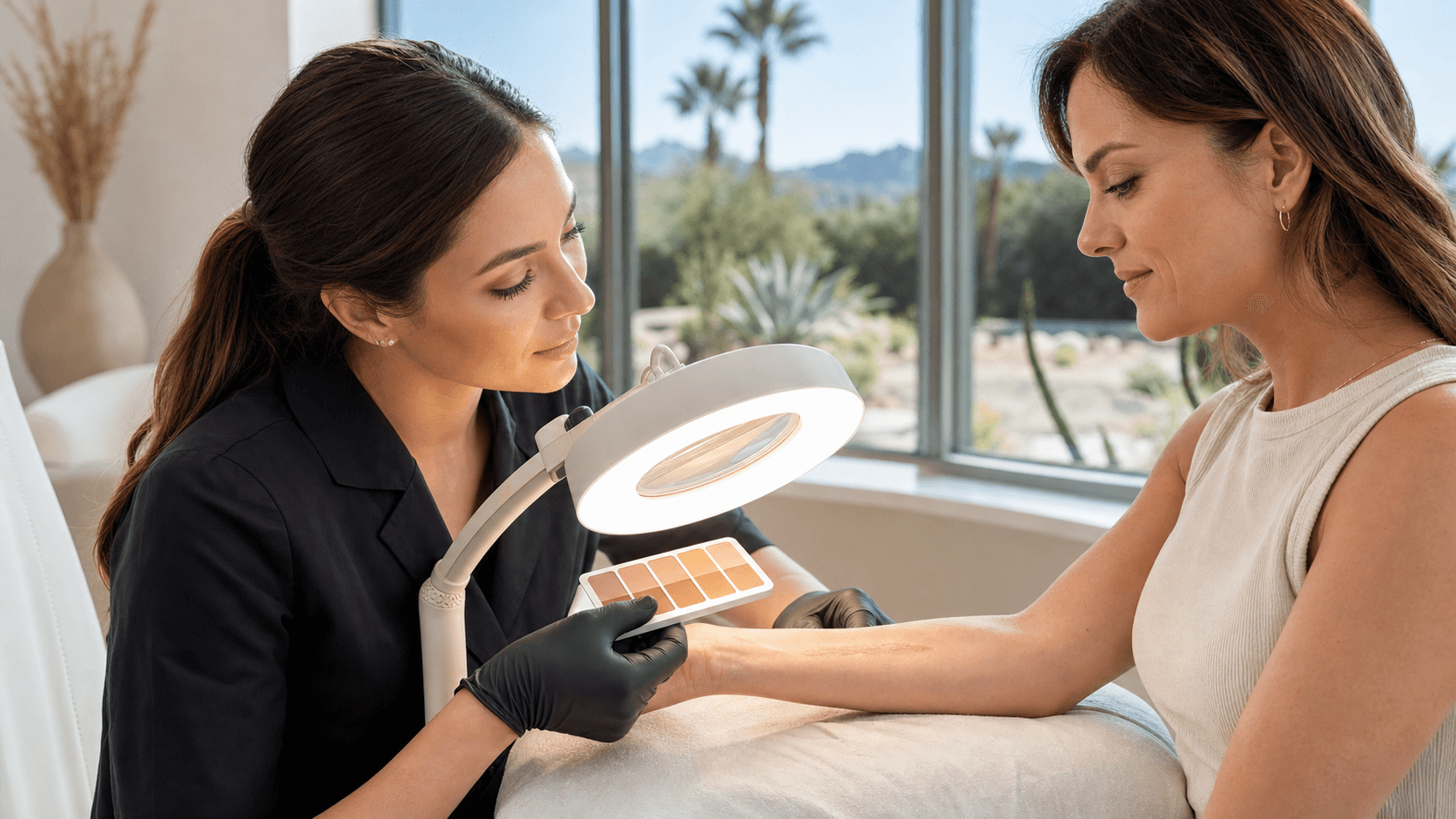
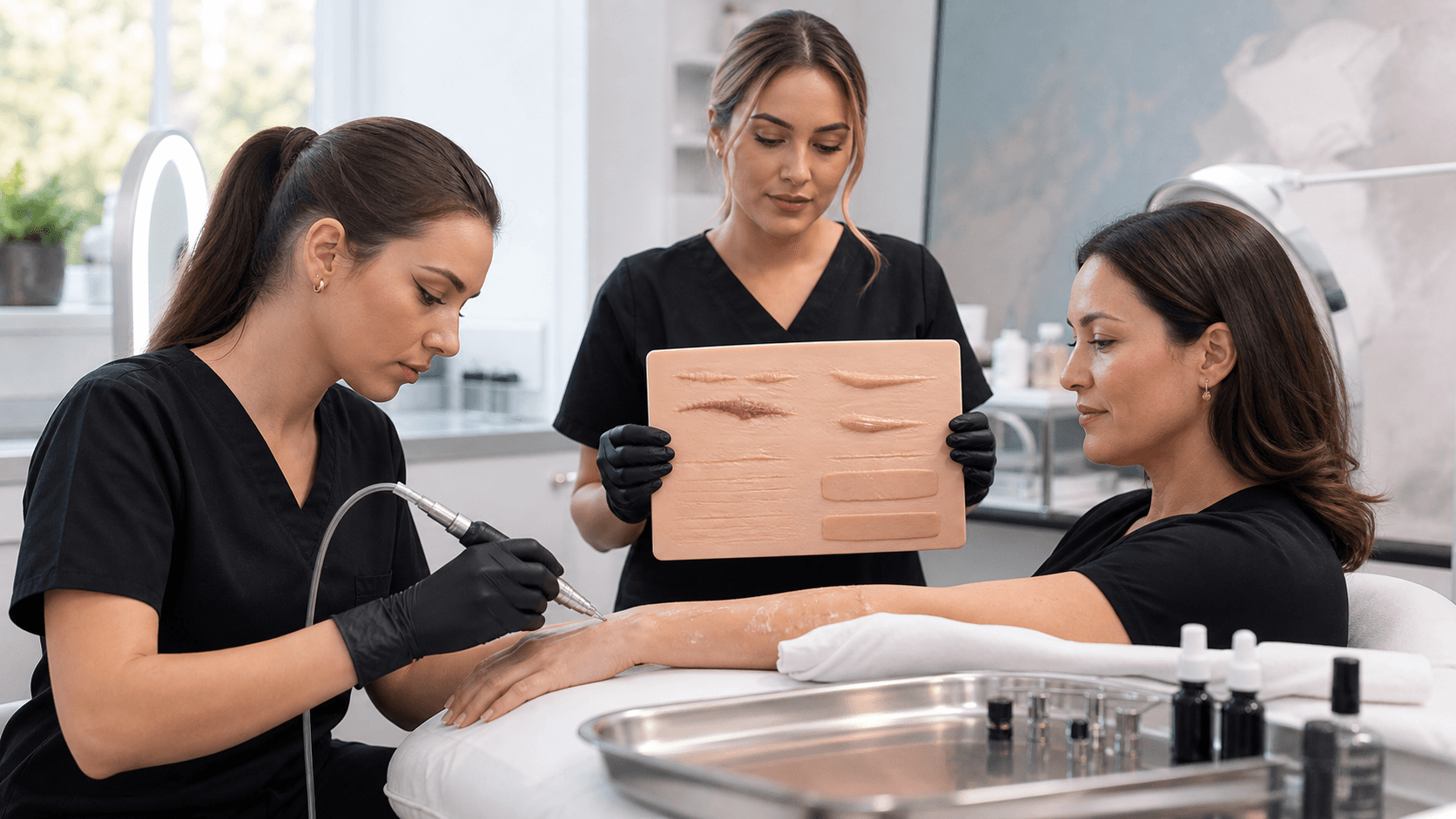
Paramedical scar camouflage is not the same as traditional decorative tattooing or cosmetic microneedling. We are not creating bold art on top of the skin, and we are not performing a spa-style cosmetic treatment. We focus on skin science, tissue response, and realistic outcomes to help scars blend more softly into the surrounding area.
A few key differences from regular tattoos:
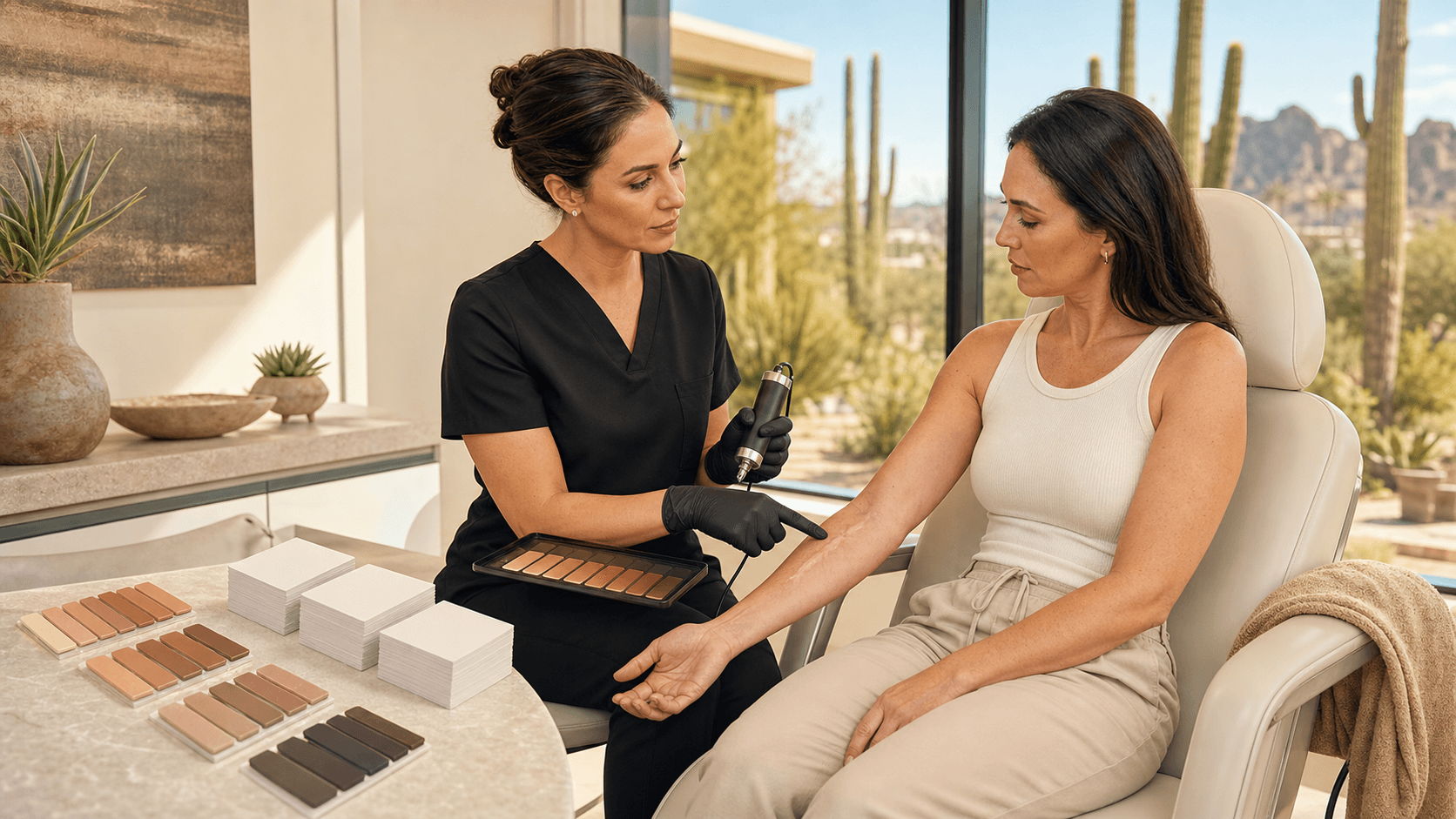
- Pigment is selected to imitate real skin tones, not decorative ink colors
- Placement is guided by how the scar tissue behaves, not by a graphic design concept
- Healing feedback from your skin shapes what we do at each visit
- Treatment planning is consultation-based and customized to your specific tissue, lifestyle, and goals
Most people require 2 to 4 Sessions Per Area. We build your outcome gradually with thin, controlled layers of pigment. The goal is not to erase your scar, but to reduce contrast so it feels quieter and less noticeable in daily life.
Different scar types need different planning:
- Surgical scars often follow a predictable line and have a more defined healing timeline after surgery
- Burn scars can be irregular, raised, or shiny, so we move more slowly and conservatively
- Stretch marks may cover larger body areas and move more with daily activity
We design your schedule around what your tissue is doing, not just the calendar.
Common Question: When Is My Scar Ready for Camouflage?
Paramedical scar camouflage works best on mature scars. This usually means waiting until the tissue has gone through its full healing cycle, often 12 to 18 Months After Surgery or Injury. Younger scars tend to be more reactive and more likely to change shape or color after we work on them.
Skin moves through three main healing phases:
- Inflammation: right after injury, the area is red, sore, and reactive
- Proliferation: new tissue and blood vessels form, color may look bright or uneven
- Remodeling: collagen reorganizes, the scar flattens or tightens, and color slowly settles
If we work too early, pigment can heal unpredictably and the scar may keep changing underneath the color. That is why we look for signs like stable color, flatter texture, and no ongoing itching before planning a paramedical scar camouflage series.
Common Question: How Does Tanning Affect My Results?
Sun exposure is one of the most important lifestyle factors we discuss during consultation:
- Strong sun exposure can darken scars and change how pigment heals
- Many people prefer to start a series outside of their peak pool or travel season
- If you know you will be in direct sun or traveling to sunny locations, we may shift your start date or extend gaps between sessions
If you tan easily, we talk through what your natural skin does over the year so we can plan pigments that look appropriate against both your lighter and darker seasons. Spray tanning can also affect how even the final result appears compared with untreated skin.
What to Expect Between Sessions: Healing Time
After each paramedical scar camouflage session, the treated area typically passes through a short, visible healing period followed by a quieter internal settling phase.
While individual responses vary, many clients can expect:
- Initial surface healing over about 7, 14 days, with flaking or dryness as the top layer settles
- More subtle color softening and blending over 4, 8 weeks as the pigment integrates
We avoid exaggerated promises. Some clients heal faster, and some need a little longer. This is why we build in enough time between visits to let the skin fully show us how it is responding.
Scheduling Surgical Scar Camouflage for Best Results
Surgical scars, such as those from tummy tucks, orthopedic procedures, or other planned operations, usually become stable on a more predictable timeline once cleared by your medical provider.
We look for:
- Color that has faded from bright red or purple toward a paler tone
- Texture that is no longer thickening, widening, or actively changing
For most surgical scars, a typical structure might include:
- A thorough consultation to review your medical history, scar age, and goals
- First session once the scar is mature and cleared by your medical provider
- Spacing of about 8 to 12 Weeks between sessions
- Thinner, more delicate layers for narrow linear scars
- Slightly stronger coverage patterns for wider or stretched scars
Across 2 to 4 Sessions, we adjust the pigment mix and placement based on how your skin heals. We expect differences between fresh work and healed results, so your plan remains flexible and data-driven.
We may change the plan if we see:
- New thickening, raised edges, or continued widening
- Color shifts like sudden redness or darkening
- Strong tanning around the scar that changes the contrast
- Unusual sensitivity or slower healing
In those cases, we might increase the time between sessions, modify the pigment formula, or focus on smaller areas per visit so we respect what your tissue is telling us.
Strategic Planning for Burn Scars and Complex Texture
Burn scars can be some of the most complex to work with. The surface may be uneven, shiny, or mixed with patches of normal skin. That means the same pigment can heal differently from one small area to the next.
Because of this, our approach with burn scars is cautious and evidence-based:
- We often start with a small test section to observe how the tissue responds
- We use lighter, more diluted layers to avoid overwhelming fragile areas
- We leave longer time between sessions so we can study how color and texture settle
Session spacing for burn scars may be longer than for surgical scars, since we want to see full healing in an area before we touch it again. Many burn scars will still fall within the range of 2 to 4 Sessions, but the exact timeline is highly individualized.
Realistic outcomes for burn scars include:
- Softening the sharp contrast between scar and surrounding skin
- Breaking up obvious edges so the area draws less attention
- Improving overall blending, without promising a perfect or permanent color match
For safety, we may pause or limit treatment if the tissue shows signs of ongoing medical activity, high sensitivity, or unpredictable pigment uptake.
Stretch Mark Camouflage and Body Area Considerations
Stretch marks form from pulling and stretching in the deeper layers of skin and often line up in patterns across the abdomen, hips, thighs, or chest. These areas move a great deal with walking, bending, and daily life, which can influence how pigment settles.
Some things we consider when planning stretch mark camouflage:
- Movement: areas that stretch often can take pigment differently
- Size: larger fields of stretch marks may need to be broken into zones, treated over multiple visits
- Pattern: some marks are narrow and shallow, others are wider or more textured
Session spacing for stretch marks is usually similar to surgical scar work, often with 8 to 12 Weeks between sessions. Across 2 to 4 Visits, we layer pigment to gently mimic the surrounding skin tones, paying close attention to your natural color shifts in light and shadow.
Life changes can affect stretch mark work, such as:
- Weight changes that tighten or loosen the skin
- Pregnancy and postpartum body shifts
- Regular tanning or spray tanning habits
When these factors change, we may adjust pigment tone, change the size of areas treated per visit, or suggest occasional maintenance sessions over time. During consultation, we discuss whether your current life stage is the right time to begin treatment.
When to Adjust Your Scar Camouflage Plan
Your skin is always part of the conversation. Even with a careful plan, we monitor how each session heals and decide together what makes sense next.
Clear signs that the schedule or pigment strategy may need a change include:
- Fading faster or lighter than expected
- Healing darker or cooler in tone than expected
- New raised or bumpy areas along the scar line
- New medications or medical treatments that affect your skin or immune response
At our studio, we rely on consultation, follow-up assessments, healed photos, and gentle touch tests to check texture and sensitivity. That information helps us fine-tune your spacing and pigment formulas so each session builds on the last in a thoughtful, medically informed way.
Your Role in Healing and Long-Term Results
Your at-home care significantly influences how your tissue responds between sessions.
To support your results:
- Protect treated areas from direct sun as they heal, using clothing or physical sunscreen once cleared by your provider
- Follow aftercare instructions exactly, including cleansing and moisturizing steps
- Let us know about upcoming travel, tanning, or major schedule changes
- Share any concerns between visits so we can respond early and adjust if needed
Paramedical scar camouflage is a partnership between your tissue and our planning. When we respect healing time, consider your lifestyle, and keep communication open, your series of sessions can feel steady, predictable, and aligned with realistic, long-term goals.
Most clients will see their outcome develop progressively over 2 to 4 Sessions, guided by careful consultation and ongoing assessment rather than a one-size-fits-all approach.
Restore Confidence With Expert Scar Camouflage
If you are ready to soften the appearance of scars and feel more at ease in your own skin, we are here to help. At TGS Lab, our artists customize each treatment to your skin tone and unique goals so your results look natural in everyday life. Explore how a scar camouflage tattoo in Scottsdale can blend your scars with the surrounding skin and create a more even-looking complexion. Schedule your session today and take the next step toward feeling more confident in your body.