From Indent to Blended: Why Scar Texture Matters
When people tell us they want their scars to "blend in," they usually mean they want the scar to stop catching their eye every time they look in the mirror. They do not want it drawing more attention than the rest of their skin. Color is part of that, but texture is just as important. A scar that is raised, indented, or shiny will still stand out even if the color is very close.
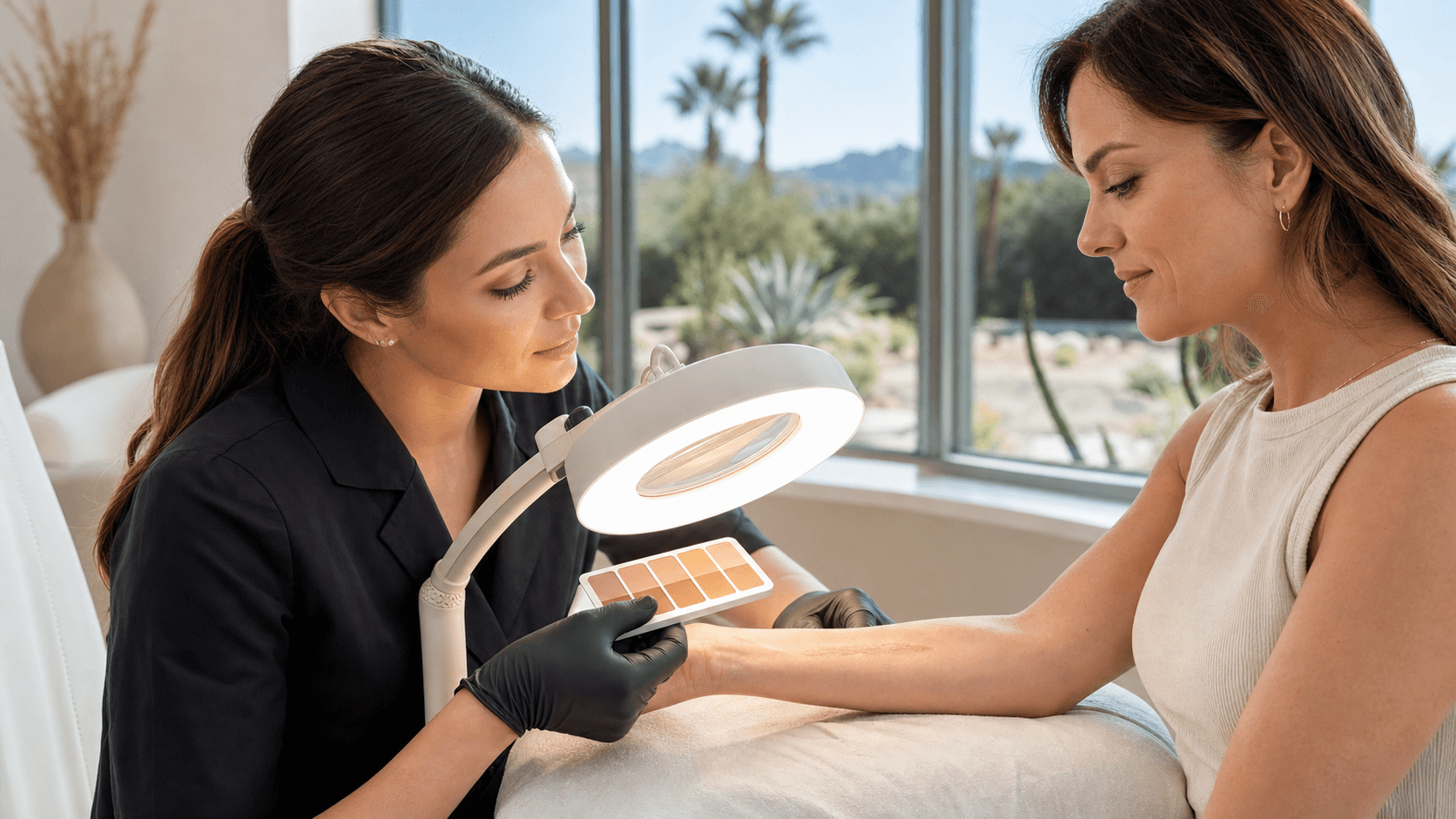
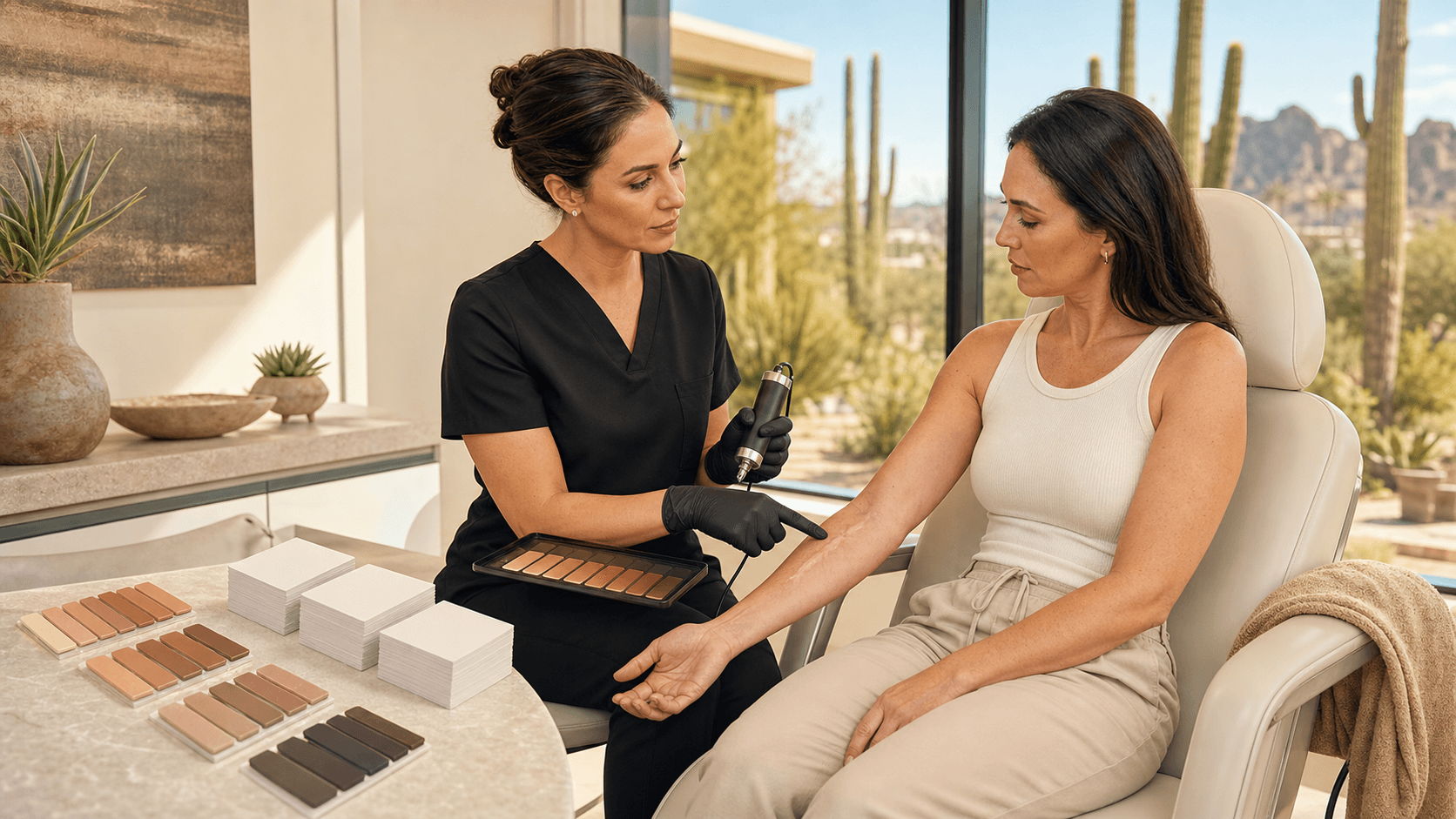
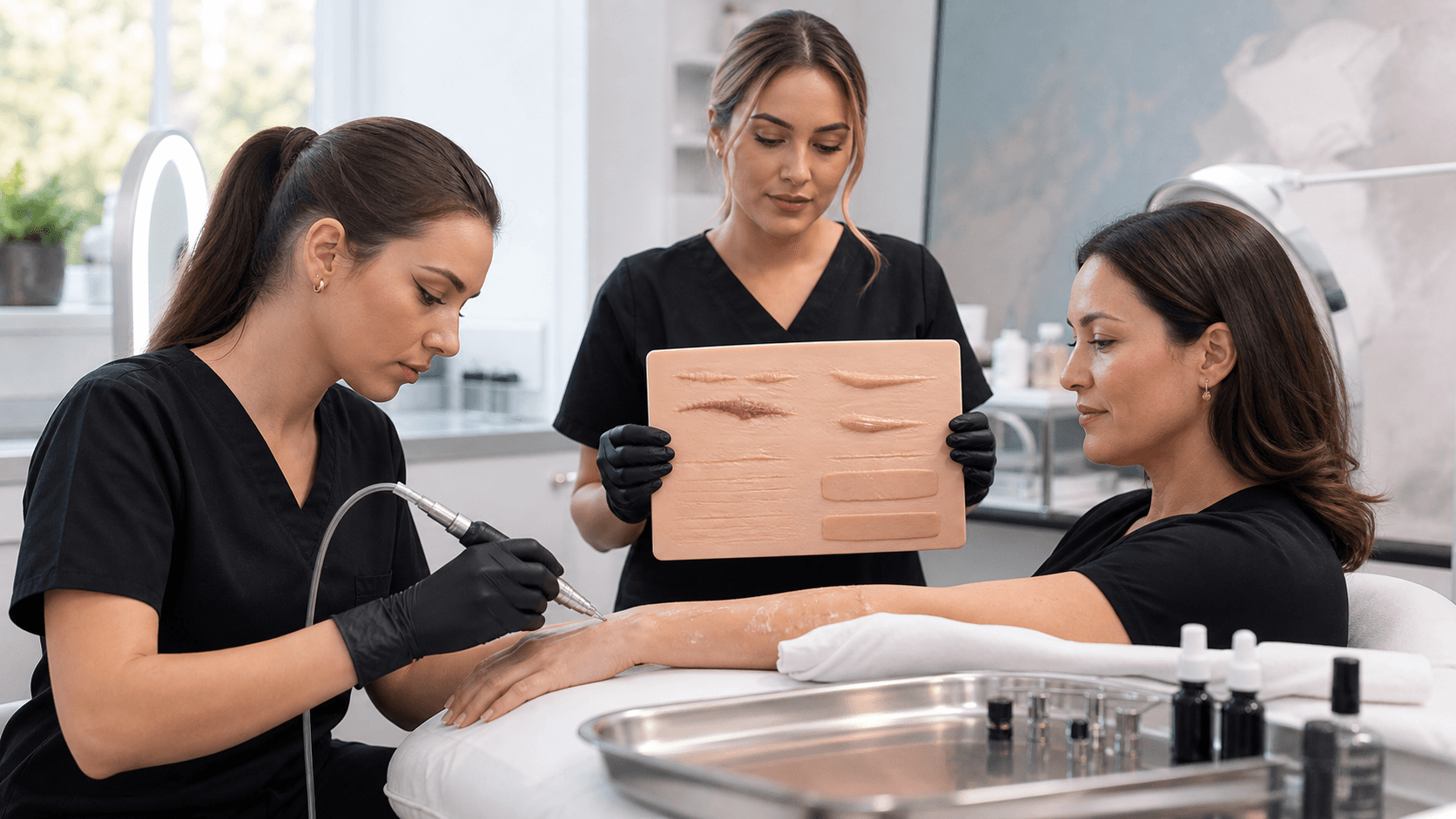
This is why we focus so much on how the scar feels under our gloves, not just how it looks in a photo. Not all scars behave the same. Raised, indented, and flat scars each heal differently and take in pigment differently. In our Scottsdale paramedical correction studio, true scar camouflage is rarely a single visit. Most people need a planned series of 2 to 4 sessions, adjusted around how that specific scar tissue responds and heals over time.
Understanding Scar Types and Skin Texture
When clients sit down with us, they often point to very different marks and call them all "scars." We break them into a few simple groups so we can talk clearly about what is realistic for their skin.
Common types include:
- Flat surgical scars
- Indented acne or trauma scars
- Raised hypertrophic or keloid-prone scars
- Stretch marks, from growth, weight changes, or pregnancy
- Mixed-texture areas that have a bit of everything
Each of these plays with light in its own way. A flat, pale surgical line might just look lighter than the skin around it. An indented scar can catch shadows and look darker, even if the color is not very different. Raised or shiny scars can bounce light back, so they show up like a stripe in photos. Stretch marks are often a mix of slight indent, slight shine, and color change, which is why they can feel stubborn.
This is also why matching color alone is not enough. Two areas can have the same surface color but look very different once you see them across a whole body area. The way light hits texture, bumps, dents, and shine, keeps drawing the eye.
Not every scar is ready for correction right away. In general:
- Flat, stable scars and stretch marks are often good candidates
- Soft, shallow indents may respond well to carefully layered work
- Actively raised or keloid-prone scars may need other strategies first
- Unstable scars that still itch, change shape, or shift color usually need more time
We always need to see the skin in person. Photos help, but they do not tell us how the scar feels, how it moves, or how it reacts to gentle pressure. A close, in-person look at a paramedical correction studio lets us suggest which approach makes the most sense for your skin, and how many sessions (typically 2 to 4) you may need.
How Texture Influences Color Matching and Blending
Scar tissue does not behave like the healthy skin right next to it. It often:
- Absorbs pigment differently
- Holds more shine or dullness
- Casts tiny shadows if it is indented or raised
All of this changes how color appears once healed. A pigment that looks like a close match on flat skin can look slightly darker inside an indent because of shadow. On shiny or raised scars, the same color can appear lighter or ashy when the light hits it.
We talk a lot about "day one match" versus "healed match." On day one, right after a session, the treated area is usually:
- Red or slightly swollen
- Darker than expected
- Surrounded by some mild irritation
Then, as the skin heals, the top layer sheds, the color softens, and the redness fades. This is why realistic, science-based plans often include:
- Small test areas on complex scars
- Layering color over 2 to 4 sessions
- Gradual fine-tuning instead of heavy color in one visit
Clients are often concerned when a newly treated scar looks a bit darker or lighter in the first couple of weeks. That swing is normal. The true result is judged after the skin has calmed, usually several weeks later.
Treatment Planning, Session Count, and Healing Timelines
At our studio, we treat scar work as a structured process, not a quick or cosmetic-style fix. A typical path looks something like this:
- Detailed assessment of scar type, texture, and movement
- Honest discussion about what can change and what cannot
- Possible test spots on areas that tend to be stubborn
- Staged sessions focused on building up a blended effect over time
Most people can expect 2 to 4 sessions, spaced out to respect healing cycles. We plan this number of visits from the beginning so expectations are clear. The exact count depends on:
- Texture depth and complexity
- How old and stable the scar is
- Where it is on the body
- How that person's tissue usually responds
Healing often includes some predictable stages:
- Days 1 to 3: mild redness, tightness, and darker color
- Days 3 to 10: flaking, dry feeling, and some itchiness
- Weeks 2 to 8: softening of color, gradual blending with nearby skin
We provide clear guidance about when it is safe to return to working out, swimming, and higher sun exposure. Treating the area gently and following aftercare directions helps keep the texture and color on track and supports more stable, realistic outcomes.
Tanning, Seasonal Timing, and Long-Term Color Stability
For accurate color matching, we want your normal, everyday skin tone, not your "I just spent all month at the pool" skin or a spray tan color. Tanning, whether from the Arizona sun or a booth, can:
- Make scars look lighter against darker skin
- Shift the contrast after we match to a lighter tone
- Cause healed camouflage to stand out again
This is why we often talk about timing. In a warm place like Scottsdale, outdoor time is a year-round reality, so we plan around your lifestyle. Many people choose to do their main sessions during seasons when their skin tone is more stable and they are not changing shade every few weeks.
Long-term, we suggest:
- Daily sun protection on treated areas
- Avoiding intentional tanning over corrected scars
- Checking in if the surrounding skin tone changes a lot over the years
Sometimes, a light maintenance visit can help keep things blended as your natural color slowly shifts with age, sun, and daily life.
When Scar Camouflage Is Not Enough
Some scars need more than color work. If a scar is very raised, actively growing, or unpredictable, we may talk about other corrective options first, or about waiting until it is more stable. Trying to rush pigment into unstable tissue can lead to patchy, uneven, or short-lived results.
Often, the best outcomes come from combining approaches over time. That might mean:
- Focusing on texture-focused treatments first
- Adding color camouflage later once the surface is calmer
- Spreading work out over several visits so the scar can respond slowly
A big part of ethical paramedical work is being willing to say "not yet" or to adjust the plan as we watch how your skin behaves. Respecting the biology of scar tissue usually leads to a more natural, blended look in the long run.
Planning Your Personalized Scar Assessment at TGS Lab
When you are ready for clear, science-based answers about your scars or stretch marks, an in-person assessment is the most helpful starting point. We look closely at texture, color shifts, and how the area moves when you bend, smile, or twist. This lets us design recommendations that fit your actual skin, not just a photo.
To get the most from a visit to TGS Lab in Scottsdale, it helps to come prepared with:
- Your medical and scar history
- Any notes on past treatments or laser work
- Current photos without filters or fresh tans
- Awareness of upcoming travel, events, or long days in the sun
Our studio is built around a paramedical, science-focused approach. We care about tissue response, realistic timelines, and quiet, blended outcomes, not cosmetic trends or instant promises. The goal is not to erase your scars overnight, but to help them sit more gently in your skin so they do not call so much attention every time you catch your reflection.
Restore Confidence With Expert Scar Camouflage Solutions
If you are ready to soften the appearance of scars and feel more comfortable in your own skin, we are here to help. At TGS Lab, we use advanced techniques and pigments to create natural-looking results tailored to your unique skin tone and goals. Learn how a customized scar camouflage tattoo in Scottsdale can support your healing journey and fit into your long-term plans. Schedule your consultation today so we can discuss the best approach for you.