Scar camouflage tattoos can be confusing if you only judge them by how they look in the first week. The truth is, what you see right after a session is not the final result. The color, softness, and level of blending all change over time as your skin heals and responds to the pigment.
At our paramedical studio in Scottsdale, we focus on how your skin behaves over months, not days. Understanding what fading really looks like helps you set healthy expectations, plan around sun and pool time, and feel calmer during the in-between stages.
How Scar Camouflage Tattoos Actually Fade Over Time
A paramedical scar camouflage tattoo is not the same as decorative body art or cosmetic microneedling. The goal is not to draw attention; it is to help scars and stretch marks blend more quietly into the surrounding skin. We place custom-mixed pigment in specific layers of the skin to soften contrast and pattern.
Here is what makes it different from decorative tattooing:
- Softer color density and coverage
- Careful respect for scar texture and sensitivity
- Pigment placement planned around how tissue is likely to heal
You will not walk out of your first session with a perfect, final match. That is not how skin works. We build your result over several visits so that fading becomes a helpful tool, not a scary surprise.
Fading is normal, expected, and planned. When you know that, it becomes easier to make smart choices about:
- When to start treatment in relation to pool season and travel
- How strict you want to be with sun protection
- How many sessions you are likely to need
What Happens Under the Skin After Your Session
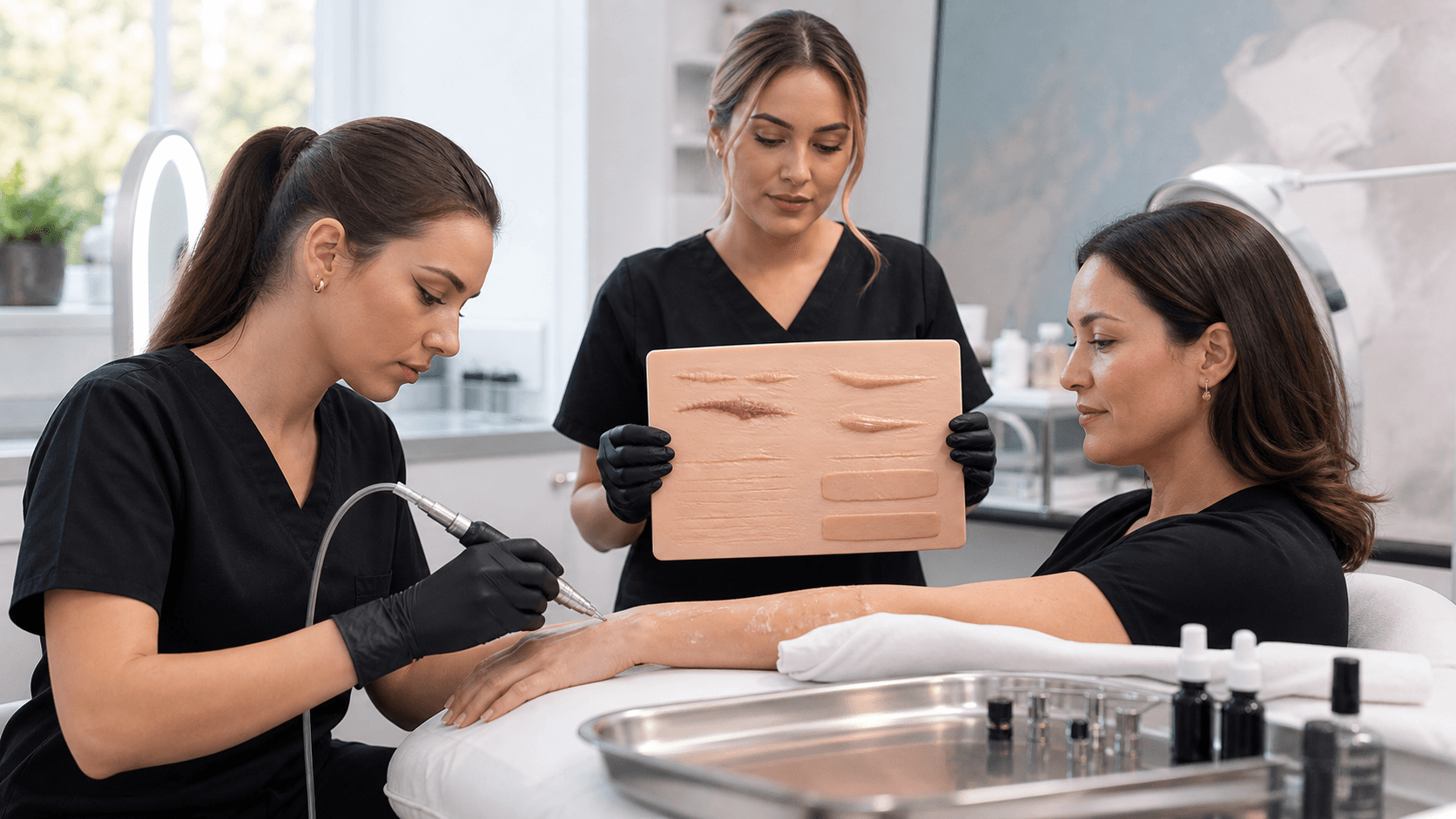
During a scar camouflage tattoo, pigment is placed in the upper layers of your skin. Your body sees this as a controlled injury and starts a natural healing response. The first few days, it is common to see some redness around the area, and the color often looks stronger than it will later.
Most people notice three clear visual stages:
- Fresh application, color looks deeper or slightly darker, plus some redness
- Early softening, light flaking or dryness as the surface heals, color starts to look more muted
- True settled color at around 6 to 8 weeks, once the deeper layers finish healing
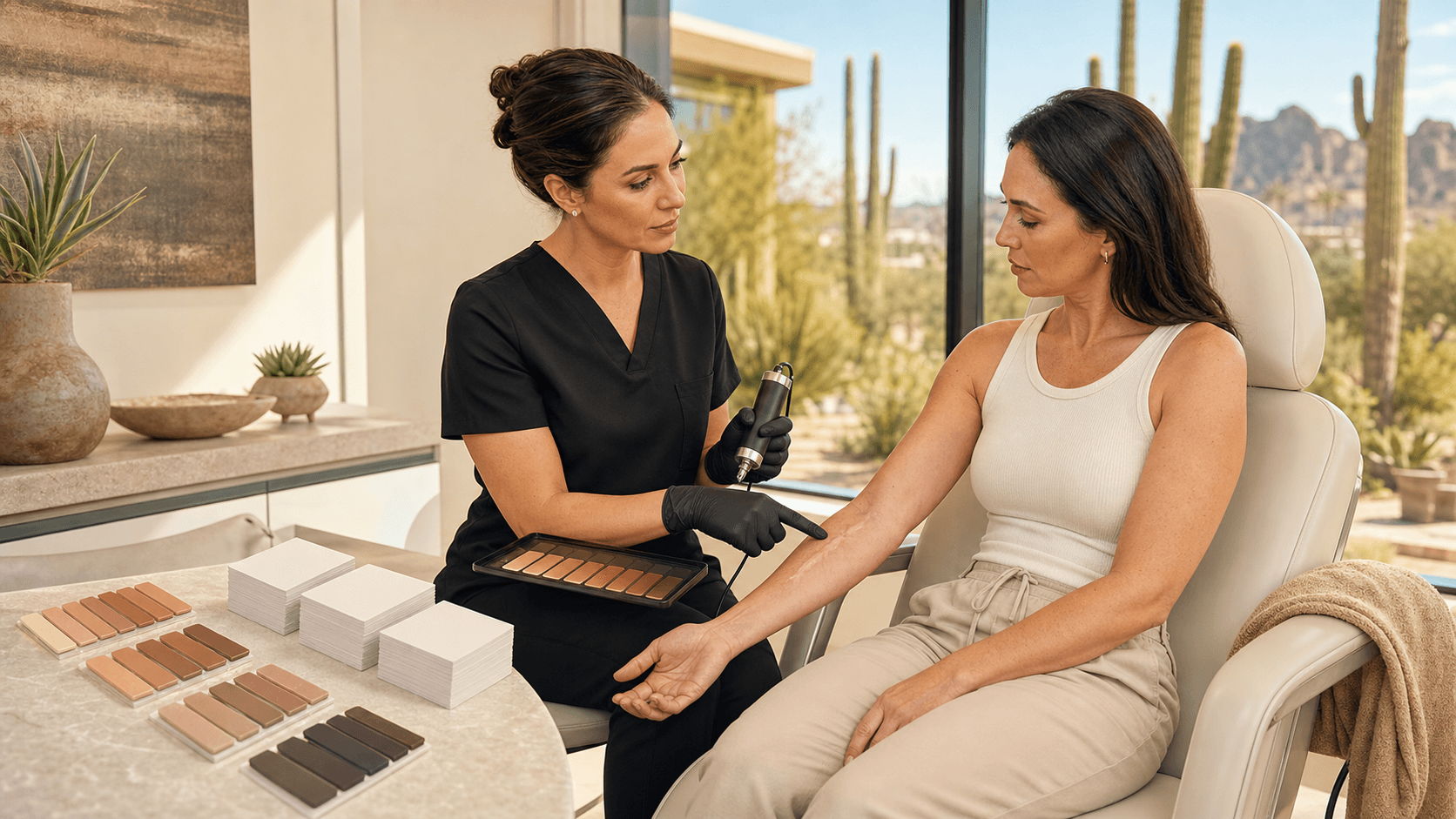
The skin on and around scars can be different from the rest of your body. It might be thinner, thicker, raised, or smoother. At TGS Lab, we plan your treatment around that tissue behavior. This is why we usually suggest 2 to 4 sessions, spaced out, instead of aiming for aggressive “one and done” coverage.
Why Fading Is Built Into a Natural-Looking Result
For a scar camouflage tattoo in Scottsdale, we are always thinking about strong sun, long days outside, and how your skin will age with that. A heavy, high-density layer of color might look okay indoors at first, but out in bright light it can show as solid, flat patches with hard edges.
A softer approach with planned fading helps avoid that. By layering color slowly, we can:
- Keep edges diffused instead of sharp
- Match the natural variation in your skin tone
- Reduce the risk of overloading fragile scar tissue
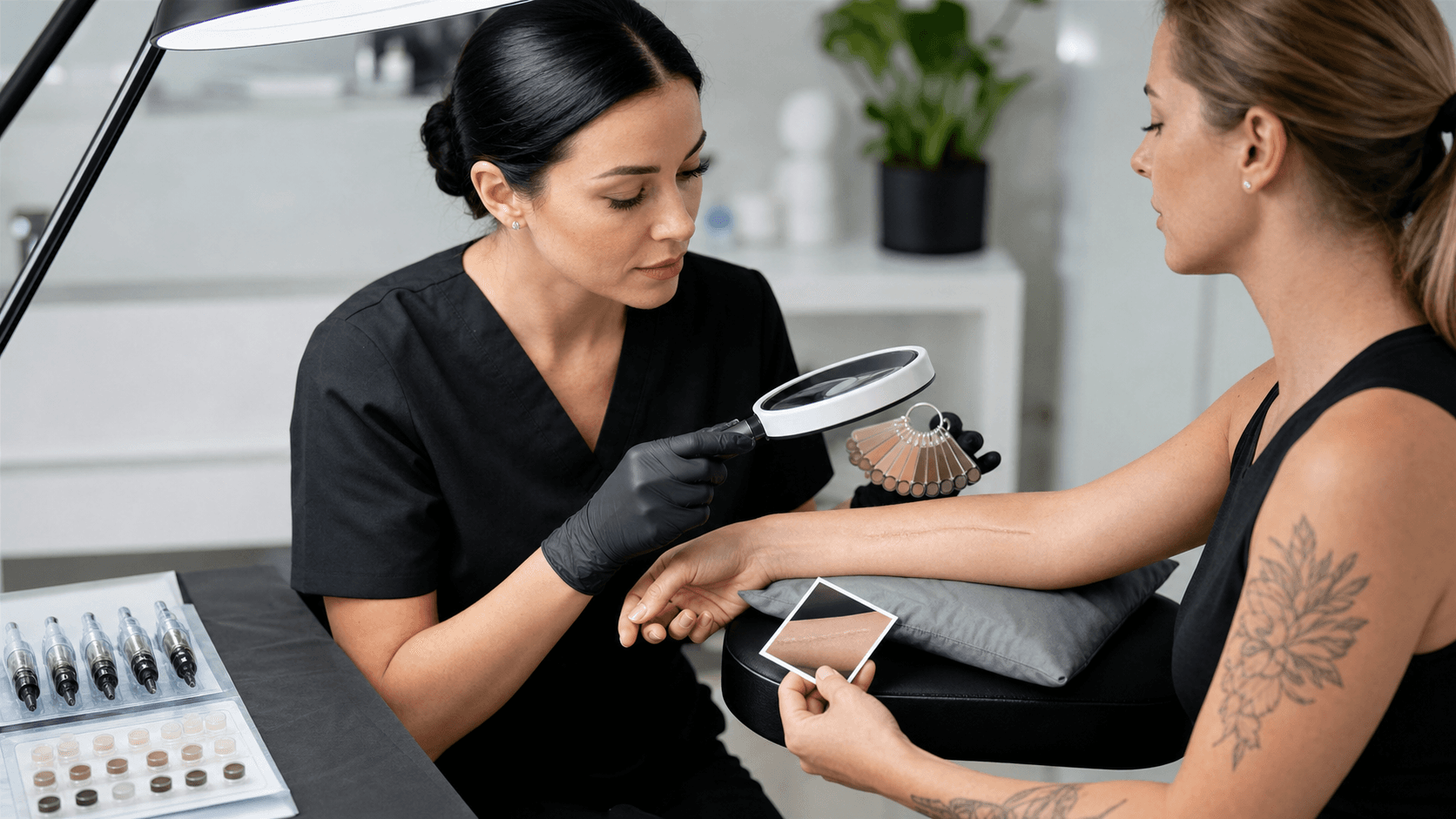
When we see how your scar holds pigment after the first fade, we can adjust. Some scar tissue pushes pigment out faster, some grabs it tightly, and some shifts it slightly cooler or warmer. Each session becomes a chance to refine color, density, and coverage instead of guessing all at once.
This conservative method is especially important for:
- Thin or stretched skin
- Raised or sunken scars
- Areas with past procedures or trauma
Fading here is not failure. It is feedback from your skin that shapes the next step.
Tanning, Seasons, and Color Matching in Scottsdale
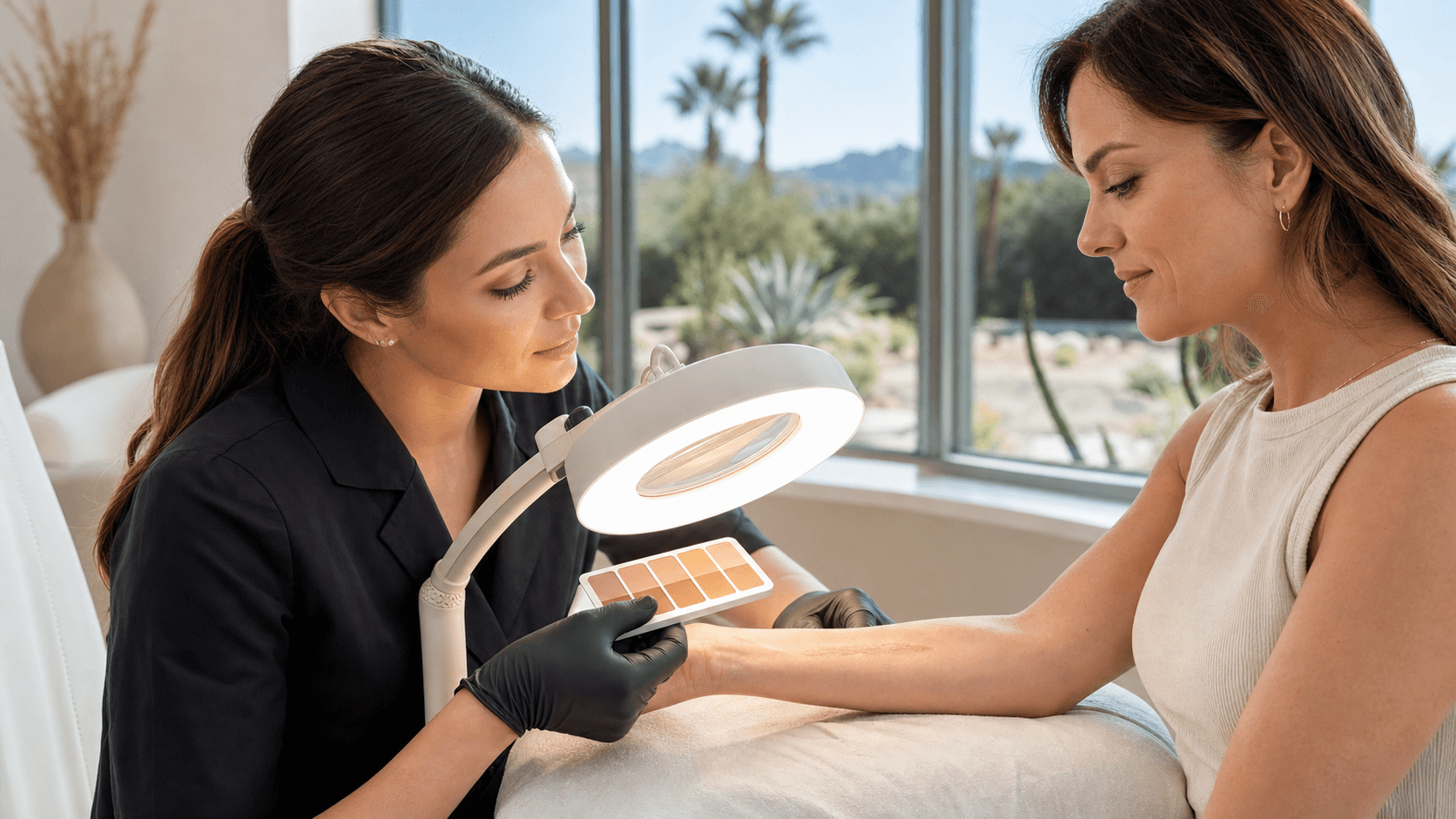
Living in Arizona means lots of sun, long pool days, and outdoor plans most of the year. That constant UV exposure changes how any pigment, including your own natural melanin, is going to look. When we match color for scar camouflage, we are not just matching to what your skin looks like on a bright weekend. We are looking for your true baseline.
During your consultation, we talk through:
- Your usual sun habits, like pool time, hiking, or golf
- How much you tan in spring and summer
- Whether your color shifts a lot between seasons
Tanning before or after treatment can change how well the area blends. If your natural skin darkens but the treated area does not tan in the same way, the scar can show again. That is why sun protection matters so much for consistent fading and long-term results.
For spring and early pool season, it can help to:
- Start treatment early enough to allow full healing before big trips
- Use high-SPF mineral sunscreen on the treated area once healed
- Choose shade or cover-ups when you know you will be out for long hours
These small choices give your camouflage a better chance to fade in a slow, predictable way instead of shifting quickly from sun damage.
How Many Sessions It Really Takes to Look Natural
Most people need between 2 and 4 sessions to reach a soft, natural blend. Each visit has a different focus so that fading and healing can guide what we do next.
A common flow looks like this:
- Session 1, careful mapping and conservative first pass to study how your tissue responds
- Session 2, refinement of color and coverage, filling in areas that lightened more than expected
- Session 3 or 4 if needed, fine-tuning of edges, texture, and tiny shifts in tone
Surface healing may feel fast, but deeper settling takes time. We usually wait several weeks between sessions to read the true color and how the scar tissue is behaving. Rushing that gap can lead to stacking too much pigment before we really know what your skin will do.
Your total number of sessions and how fast your camouflage fades depend on things like:
- Age and type of the scar
- Body area and how much it moves or rubs on clothing
- Previous procedures in the same spot
- Your skin type, healing speed, and lifestyle
We cannot promise an exact session count at the start, but we can explain the plan and why we are choosing a careful pace.
What “Normal” Fading Looks Like vs. When to Check In
Over months and years, natural fading usually looks soft and gradual. The treated area often:
- Lightens slightly compared to the first settled color
- Blends more with the surrounding skin pattern
- Becomes less noticeable in casual, everyday lighting
That kind of slow change is expected. It is part of living in your skin, especially in a sunny place like Scottsdale. Still, there are times when a check-in with your paramedical practitioner makes sense.
Reach out for a professional review if you notice:
- Abrupt color shifts in a short amount of time
- Unexpected darkening or a strong outline becoming more visible
- Pigment that suddenly looks much cooler or warmer than your natural tone
Major life changes can also affect your skin, such as pregnancy, significant weight changes, or new skin treatments. After those shifts, it can help to have the area reassessed to see if a light touch-up or adjustment would support better blending.
Planning Your Scar Camouflage Journey with Confidence
Scar camouflage works best when you think of it as a phased correction plan, not a quick cover-up. Each session builds on the last, and fading is part of the roadmap. When you know this ahead of time, the healing stages feel less stressful and the small changes make more sense.
At TGS Lab, we design treatment maps around your skin history, scar pattern, and lifestyle, including how much time you spend in the sun. Bring questions about fading, tanning, and timelines to your paramedical consultation so we can walk through what is realistic for your specific case. With clear planning and honest expectations, a scar camouflage tattoo in Scottsdale can age in a way that feels quiet, natural, and aligned with how your skin lives day to day.
Restore Confidence With Personalized Scar Camouflage Solutions
If you are ready to soften the appearance of scars and feel more at ease in your skin, we are here to help guide you through every step. Our artists at TGS Lab specialize in natural-looking results tailored to your unique skin tone and scar pattern. Explore how a scar camouflage tattoo in Scottsdale can blend your scars more seamlessly with the surrounding skin. Reach out today so we can discuss your goals and outline a customized plan for your treatment.