What Mature Surgical Scars Need Before Color Work
Surgical scar camouflage in Arizona works best when the scar is truly ready and the skin has been prepared with care. Color alone cannot fix a scar that is still healing, raised, sun-damaged, or changing every month.
At our paramedical correction studio, we look at timing, scar behavior, texture, and your real skin tone before we even think about adding pigment. In this article, we will walk through what “mature” means, what needs to be corrected first, how many sessions are common, and how Scottsdale sun habits affect your plan.
Understanding When a Surgical Scar Is Truly Mature
When surgeons talk about a scar “maturing,” they are talking about a long process, not just a few weeks after stitches come out. Scars move through stages:
- Early inflammatory stage: The first weeks, the area is fresh, pink or red, and sometimes tender
- Remodeling stage: The next several months, the scar can feel tight, lumpy, or bumpy as the body rearranges collagen
- Long-term maturation: Usually around 12 to 18 months, color and texture start to settle and stay more consistent
For many common surgeries like C-sections, tummy tucks, breast surgery, or joint surgery, it often takes at least a year before the scar behaves in a steady way. A calendar can help, but the skin itself is the real guide.
Signs a scar may be ready for camouflage work include:
- No open areas, drainage, or scabs
- The color has looked about the same for several months
- Red, purple, or dark tones have slowly faded and are no longer changing fast
- The edges are not still thickening, spreading, or stretching out
There are also red flags:
- The scar is very raised, hard, or growing beyond the original cut, which can look keloid-like
- Ongoing sharp pain, burning, or intense itching
- The scar keeps getting darker or wider over time
- You notice new changes long after the surgery date
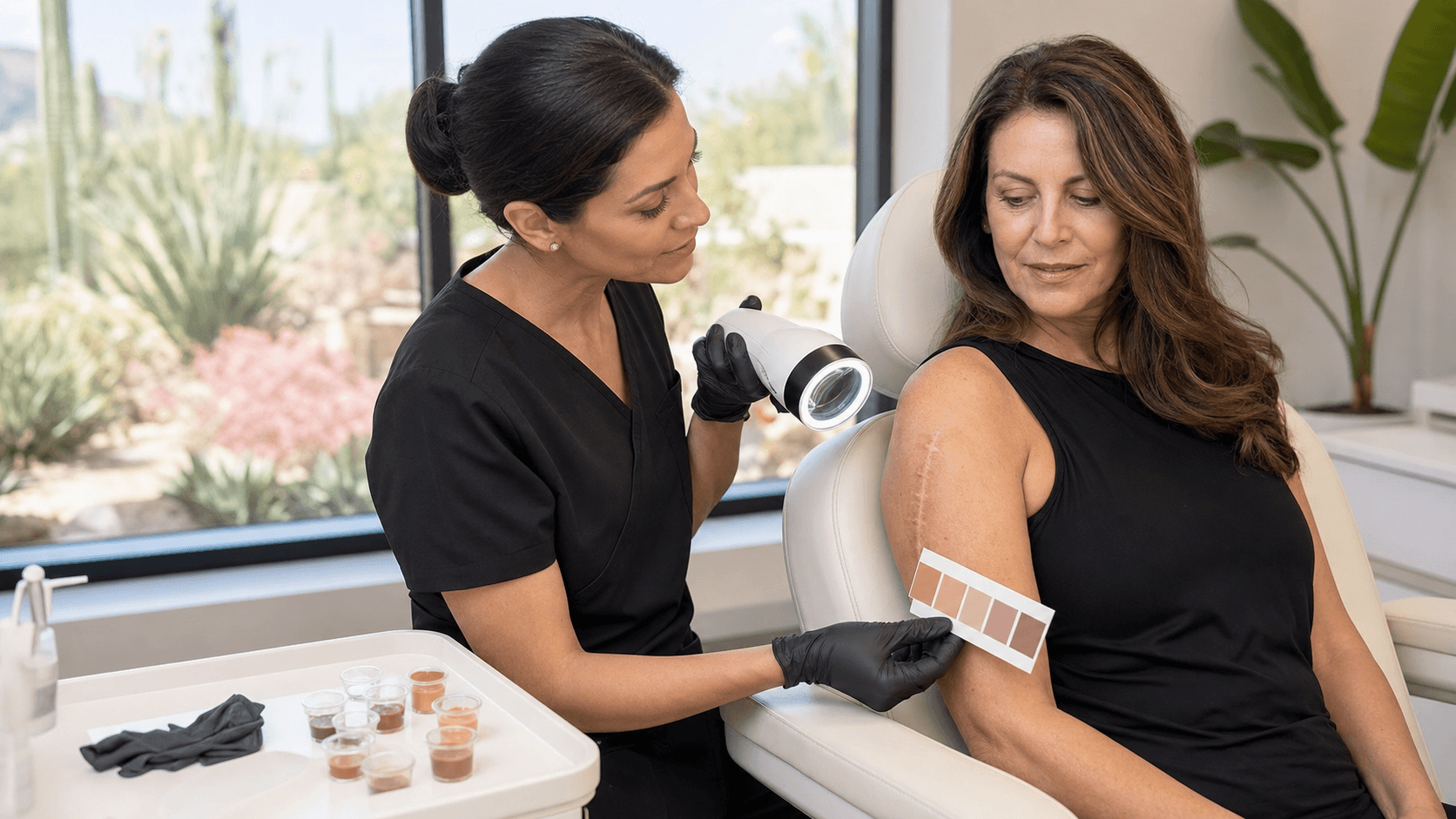
At TGS Lab, we ask for clear photos and perform in-person assessments in Scottsdale to decide if a scar is ready. We do not rely on the surgery date alone, because every body heals at its own pace and local factors like sun exposure change how scars behave.
Why Texture Correction Comes Before Camouflage
Color cannot hide a strong change in texture. If a scar is raised, dented, rigid, or shiny, it will catch the light differently than the skin around it. Even with great color matching, your eye will still see that change in surface.
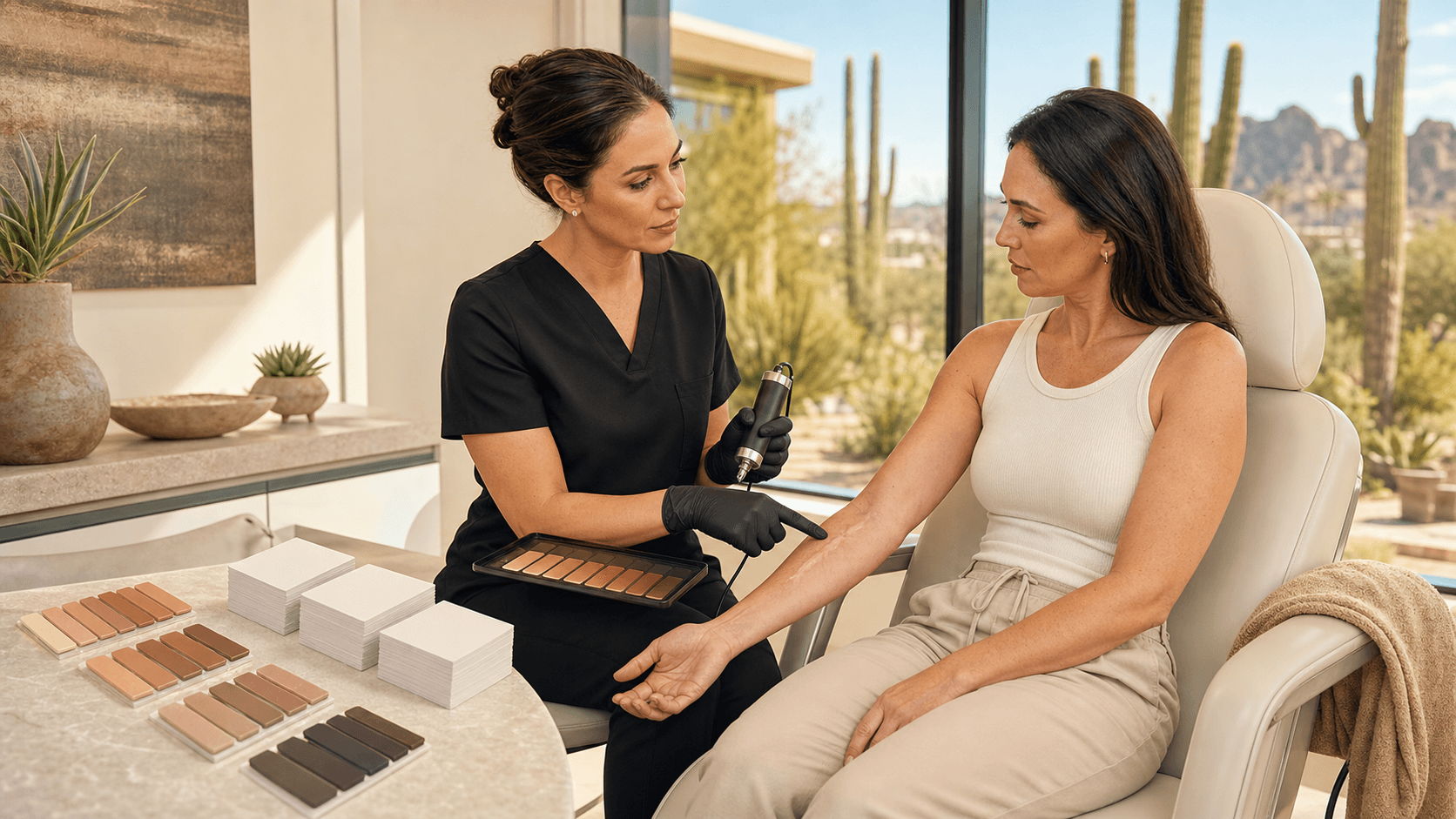
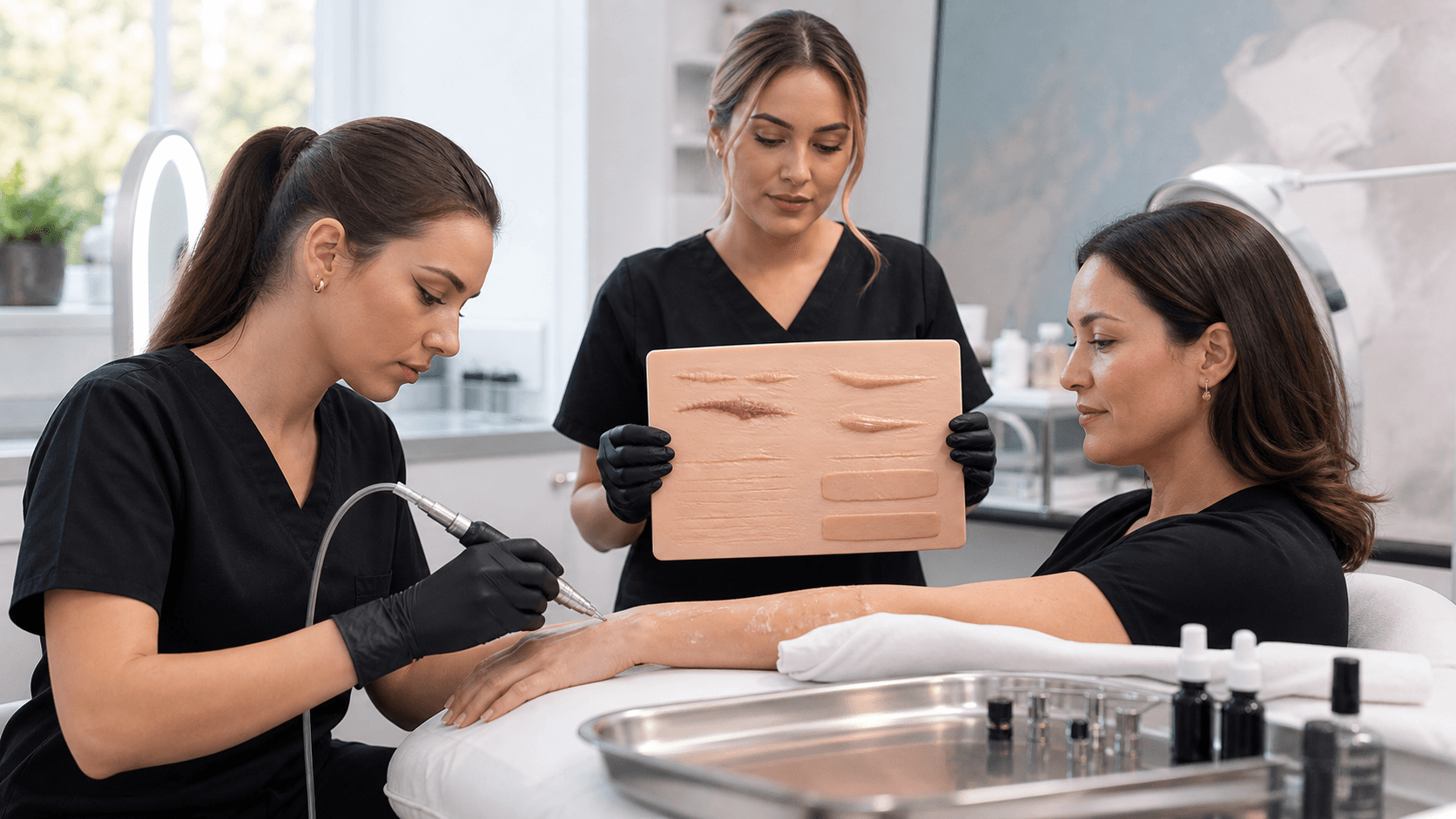
That is why, in a paramedical correction setting, we focus on texture first. Before color, we may use:
- Targeted revision-style methods to help soften sharp edges
- Controlled needling approaches aimed at signaling the skin to remodel
- Non-pigment techniques that work with the tissue so the scar blends better into nearby skin
These sessions are about training the tissue, not decorating it. Texture work is usually a series, not a one-time event. Many people need around 2 to 4 visits focused only on texture, spaced several weeks apart, before color work makes sense.
We talk a lot about realistic outcomes. We are not erasing scars, and we do not promise that. What we aim for is:
- Softer borders
- Less shine or stiffness
- A surface that blends better with the surrounding skin
When texture is improved first, any later surgical scar camouflage in Arizona tends to look more natural and draw less attention in everyday life.
Color, Tanning, and Skin Tone Matching in Scottsdale
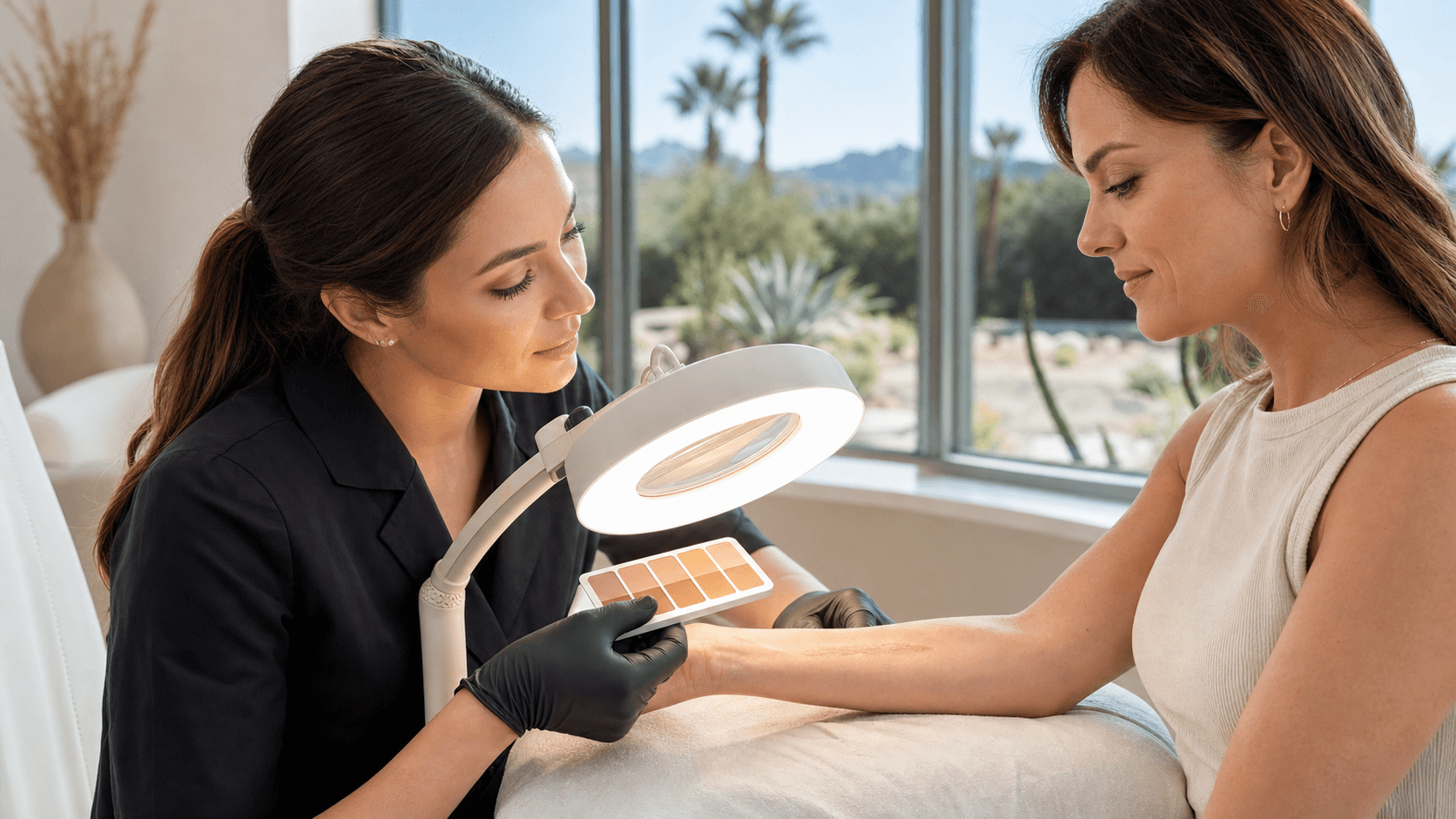
Once texture is stable, then we can talk color. Your natural skin color and undertone guide pigment choice. But in Scottsdale, we also have to think about how much time you spend in the sun and how your skin changes across the year.
Strong UV exposure can:
- Darken the skin around the scar while the scar itself may stay lighter
- Shift your tone between cooler and warmer shades with tanning
- Fade or change pigments faster if you are often outside without protection
This is why steady sun habits are so important before and after treatment. We match pigment to your real baseline color, not to:
- A fresh tan from a pool weekend
- A spray tan or self-tanner
- A short-term darker tone from recent sun exposure
For the best match, we want to see your skin when it is in its more usual, stable state. After color work, the pigment can look stronger, darker, or warmer in the first days. Over several weeks it softens and settles.
Most people need multiple color sessions for fine-tuning. A common pattern is 2 to 4 total appointments, with some focused on texture and some on color adjustment. Each session tells us how your tissue responds, how the pigment heals, and what needs to be refined next.
Planning Sessions, Healing Time, and Daily Life
Planning matters, especially as spring leads into swimsuit and travel season in Arizona. A typical roadmap for mature surgical scars looks like this:
- Initial assessment for scar age, behavior, skin type, and sun habits
- A series of texture-focused sessions if needed
- Later, cautious color sessions with time in between for healing and review
After each visit, there are two healing windows to keep in mind:
- Surface recovery: often about 7 to 14 days where the area can look pink, slightly swollen, or have light flaking or dryness
- Deeper settling: about 4 to 8 weeks where the tissue reorganizes and pigment softens into its longer-term look
This affects how you plan around:
- Pool time, lake trips, or spa days
- Travel that might involve lots of sun or friction on the area
- Events where you want the area to look calm, not freshly treated
Common questions we hear include:
- How many sessions will I need? Many people fall into that 2 to 4 session range, but tissue response always leads the plan.
- How will it look while healing? Expect temporary color shifts, some dryness, and the area looking more noticeable before it looks better.
- What needs to change in daily life? You may need to pause certain products, avoid direct sun on the area, and follow specific aftercare between visits.
Every plan is adjusted as we see how your scar heals from each session. We do not follow a rigid template because your tissue, health history, and lifestyle are unique.
How TGS Lab Builds a Safe, Realistic Scar Plan
At TGS Lab in Scottsdale, our process starts with a detailed conversation and close visual review. We look at:
- What surgery you had and where
- How long it has been since the operation
- Any previous scar treatments or complications
- Your skin type, color, and typical sun exposure in Arizona
We stay within clear ethical limits. We do not claim to remove scars or erase them. If we see signs of medical concern, like ongoing growth or unusual changes, we recommend that you speak with your medical provider and, when needed, we coordinate care.
Our studio is focused on paramedical correction work, which means we are always thinking about:
- How tissue is likely to respond, not just how it looks today
- The long view, including how the scar might look in a year or more
- Gentle, staged changes instead of aggressive cover-up promises
For anyone considering surgical scar camouflage in Arizona, the key steps are patience, honest assessment, and realistic goals. Mature scars need time, texture support, and stable skin tone before color can do its best work. When those pieces come together, camouflage can shift a scar from the first thing you see to something that quietly blends into the rest of your skin story.
Restore Confidence With Advanced Scar Camouflage
If you are ready to reduce the appearance of surgical scars with a subtle, natural-looking result, we are here to help. At TGS Lab, our team carefully customizes each treatment so your skin tone and texture look as seamless as possible. Explore how our specialized surgical scar camouflage in Arizona can support your healing journey and fit your goals. Schedule your personalized consultation today so we can design the right approach for you.